

What Challenges Arise in Micro-Scale Drilling with PCD Micro Drills?
Small-scale drilling brings distinct problems because of the very tiny tool sizes and the accuracy needed in fields like electronics, aerospace, and medical device production. When people use PCD micro drills, two of the biggest concerns are heat buildup and chip removal. Handling these elements straight away influences the exactness, toughness, and surface standard of the final part.
How Does Heat Generation Affect Micro-Scale Drilling?
Heat buildup acts as a key element in small-drilling tasks. Too much thermal rise can cause quick tool wear and size errors. The small measure of micro drills means that even small temperature jumps can have a bigger impact on tool work.
- Heat generation can lead to tool wear and reduced drill life.
- Excessive heat can alter material properties, affecting precision.
- Effective heat management is crucial for maintaining accuracy.
In drilling, rub between the cutting tip and part creates heat that needs fast spreading. If not managed, this heat can soften the part or bring thermal swelling that twists hole shape. In bad cases, too much heat might lead to tiny cracks or snapping of the drill tip.
Why Is Chip Evacuation Critical in Micro-Scale Drilling?
Chip removal stands as another big hurdle at the small scale. The tight grooves of micro drills limit chip movement, which makes it hard to clear waste from the cutting spot.
- Poor chip evacuation can cause clogging and tool breakage.
- Efficient chip removal ensures smooth drilling operations.
- Proper evacuation strategies enhance surface finish quality.
Stuck chips raise rub and heat buildup, which leads to early wear or total breakdown. Thus, tuning groove design and changing cutting settings are vital for keeping steady chip clearing in fast-drilling tasks.
How Do PCD Micro Drills Mitigate Heat Generation?
PCD micro drills are made to deal with these problems better than usual carbide tools. Their strong material traits let them keep sharpness, cut rub, and handle heat loads well during fine-drilling work.
What Material Properties of PCD Contribute to Heat Management?
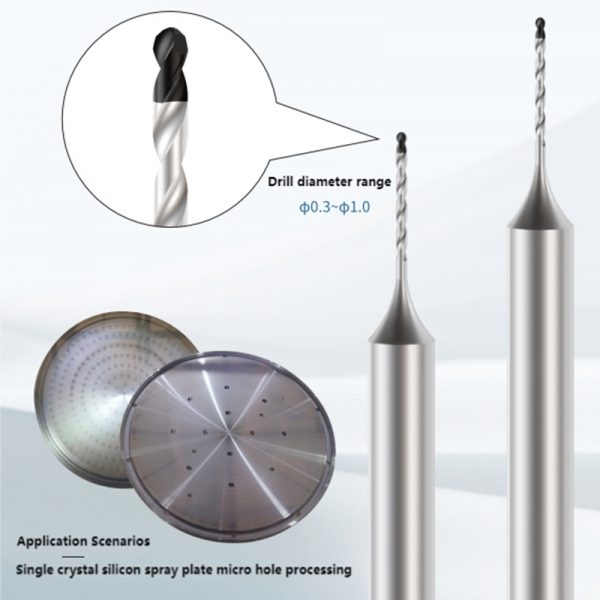
PCD micro drills feature high hardness, excellent wear resistance, and a significantly longer service life compared with traditional alloy micro drills. These built-in qualities lessen bending under high heat and cut down rub heating at the cutting point.
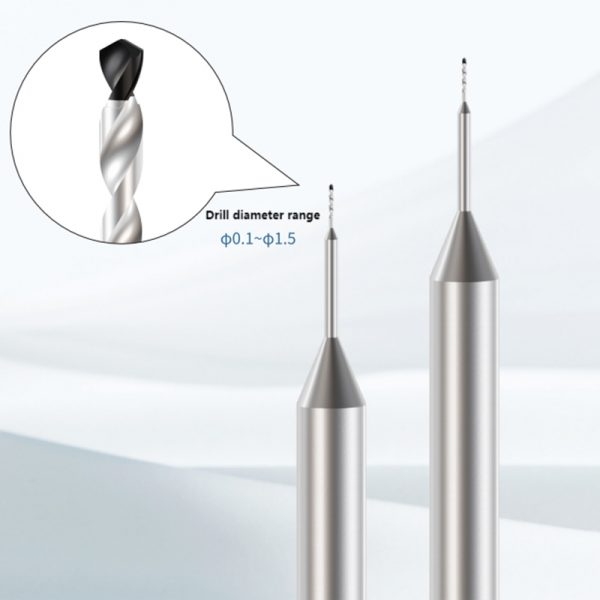
Polycrystalline diamond is made of diamond particles and cemented carbide substrates sintered at high temperature and high pressure. It has both the wear resistance of diamond and the high strength of cemented carbide. Its outstanding heat flow ability aids in spreading heat quickly from the cutting tip. This quality keeps steady cutting heat even in tough setups. The mix of toughness and low friction level cuts sticking between tool and part materials. That is a key point in stopping built-up edge buildup.
What Techniques Are Used to Control Temperature During Drilling?
To better manage heat in drilling tasks, makers use forward methods like tuned spin speeds, coolant setups, and exact tool shapes.
Fast drilling shortens touch time between tool and material, which limits heat rise per turn. Coolant systems—based on air or liquid—often join the process to take away leftover heat from the cutting area. By mixing these ways with PCD’s natural heat steadiness, users gain better size exactness even when cutting sensitive parts.
How Are Chips Effectively Evacuated in Micro Drilling?
Good chip removal makes sure steady work in small-drilling tasks by stopping blocks and keeping easy material clearing. The build traits of PCD micro drills hold a central part in reaching this aim.
What Design Features Aid Chip Evacuation in PCD Micro Drills?
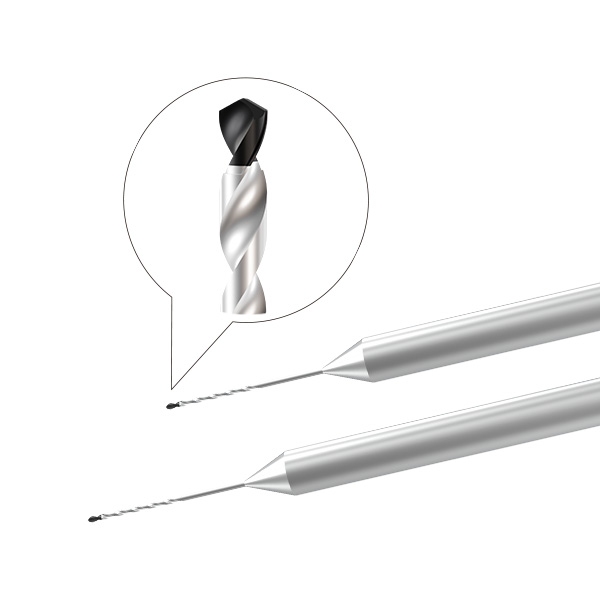
The grinding groove is smooth and the chip removal is excellent, the edge surface is polished and the main edge is sharp, and the tip rotates stably and the hole position is accurate. These design features ensure that chips flow smoothly through helical flutes without obstructing movement inside tiny holes.
Spiral groove shapes help ongoing chip movement while lowering resistance on groove sides. Tuned rake angles also cut chip twisting. This helps chips leave easily even at high spin speeds. In the end, users see better surface standard on drilled holes with less rough edges or flaws.
How Does Drill Speed Influence Chip Evacuation?
Drill speed touches chip forming patterns right away. Higher spin rates make smaller chips that clear easier through tight paths. Yet, too much speed can boost spin forces or rub heating if not set right.
Changing feed rate with speed aids in holding balance between good chip clearing and managed wear on cutting tips. Trained workers adjust these settings based on material kind—such as aluminum alloys or ceramics—to get best outcomes without hurting tool life.
Introducing Worldia’s PCD Micro Drill Solutions
At Worldia, we focus on creating advanced superhard tools built for exact fields where trust and steadiness matter most. Our PCD micro drills show this idea by blending strong materials with new build fixes fit for hard cutting jobs.
Why Choose Worldia for Your Micro Drilling Needs?
For hard and brittle materials—such as glass, ceramics, cemented carbide, composites, and graphite—Worldia offers in-house developed PCD micro drills (diameters from 0.08mm) for electronic and medical applications. These tools deliver exceptional accuracy across diverse applications requiring ultra-fine hole tolerances.
Our products are engineered for long service life under extreme conditions while maintaining consistent performance throughout production runs. In addition to processing metallic materials, they are also suitable for machining inorganic non-metallic materials with high precision. This versatility makes them ideal for sectors demanding both productivity and precision—from semiconductor fabrication to aerospace component manufacturing.
What Sets Worldia’s PCD Micro Drills Apart from Others?
Our engineering approach emphasizes innovation through research-driven design improvements focused on heat management and chip evacuation efficiency. Compared with traditional alloy micro drills, PCD micro drills produce hole walls of superior quality. Each drill undergoes rigorous testing using equipment sourced from leading global manufacturers to ensure traceability and dimensional integrity across every batch we produce.
We continuously refine flute geometry based on empirical data gathered from real-world applications to maximize performance consistency across varying materials like aluminum alloys or composite substrates.
FAQ
Q: What Makes PCD a Preferred Material for Micro Drills?
A: PCD offers exceptional hardness and thermal conductivity, making it ideal for precision drilling applications where heat dissipation is critical. Its ability to resist wear ensures stable performance over extended cycles compared with carbide alternatives.
Q: How Can I Improve Chip Evacuation in My Drilling Process?
A: Utilizing drills with optimized flute designs enhances chip flow efficiency while adjusting spindle speed helps balance removal rate against wear progression during operation.
Q: Are There Specific Applications Where Worldia’s PCD Micro Drills Excel?
A: Worldia’s drills are particularly effective in industries requiring high precision, such as aerospace, electronics, and medical device manufacturing, due to their durability and performance under extreme conditions.

-09.jpg)
-16.jpg)