
High-hardness machining challenges the edge with abrasion, heat, force, chips, vibration, and dimensional drift. A PCBN insert addresses these demands when grade, edge preparation, geometry, and cutting data match the workpiece. The objective is repeatable tool life and surface integrity.
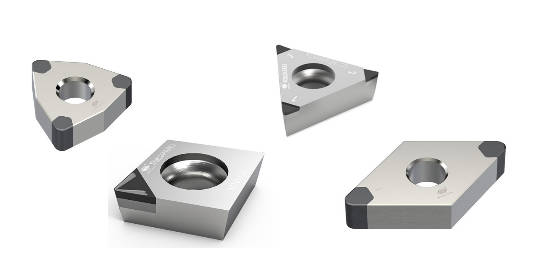
어떻게 PCBN Material Improve Wear Resistance in High-Hardness Cutting?
Polycrystalline cubic boron nitride is intended for demanding ferrous and abrasive work. CBN has hardness second only to diamond, while PCBN grades balance wear resistance and toughness. A documented PCBN material range is more useful than a generic hardness claim. Grade must match hardness, abrasives, continuity, allowance, and finish.
PCBN has high oxidation resistance and can support dry cutting in suitable ferrous applications. Dry cutting does not remove thermal control. Clamping, overhang, rigidity, and heat dissipation determine whether a PCBN insert remains stable.
Which PCBN Grade Characteristics Balance Wear and Impact Resistance?
Powder-metal parts may combine high hardness, abrasive particles, and variable interruptions. Wear-oriented grades may suit continuous cuts, while tougher grades are considered when the edge encounters interruptions or unstable stock. Documented powder-metallurgy grades differ in CBN content and in the balance of wear resistance, impact resistance, and toughness. The practical choice is a controlled comparison under representative conditions, not a grade selected from hardness alone.
Can Solid PCBN and Tipped Inserts Serve Different Stability Requirements?
The phrase solid PCBN describes a construction approach, not a universal solution. A solid body can be relevant when tool design, rigidity, heat flow, and component geometry justify it. A tipped or brazed PCBN insert can be more practical when only the cutting zone needs superhard material or when a replaceable edge lowers lifecycle cost. Buyers should compare runout, support, edge security, reconditioning options, and cost per conforming part.
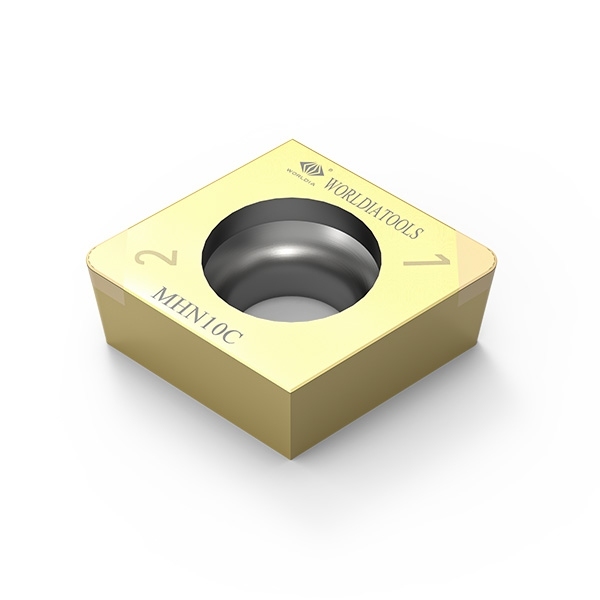
어떻게 PCBN Inserts Protect Surface Integrity During Hard Turning?
Surface integrity depends on more than edge hardness. Edge hone, rake geometry, chip-breaker design, speed, feed, depth, workholding, and thermal control interact during hard turning. A stable PCBN insert should generate predictable forces and chips so the finished surface avoids chatter, chip wrapping, or edge drift.
What Edge and Chip-Control Features Reduce Scratching and Chatter?
Interrupted cuts need edge strength for impact, while finishing cuts need an edge condition supporting good surface roughness and dimensional control. Chip-breaker grooves help manage chips at defined depths, but selection must match material and feed. Short overhang and high-strength clamping matter for thin-walled or vibration-sensitive components. These controls help a PCBN insert protect the surface.
How Should Cutting Data Be Controlled for Stable Results?
A useful trial records hardness, material group, allowance, continuity, machine, holder, coolant, speed, feed, depth, edge preparation, and acceptance criteria. Measure wear, roughness, dimensional drift, chips, cycle time, and cost per conforming component. For a PCBN insert, batch repeatability is stronger evidence than a single first piece.
Where Are PCBN Inserts Used in Powder Metal, Valve Seat and CV Joint Machining?
Application fit begins with the feature and failure mode. Searches for PCBN for powder metal usually point to components where abrasive constituents and hard phases accelerate edge wear. The recommendation should consider grade toughness, continuity, stock variation, and thermal behavior. A powder-metallurgy transmission component may need a different balance from a stable finishing cut in a hardened steel ring.
Which PCBN Inserts Fit Powder-Metal and Hard Cast-Iron Components?
For powder metallurgy, grades can be screened by CBN content, wear resistance, impact resistance, and interruption suitability. The term solid PCBN for hard cast iron is a request for construction and grade evaluation, not proof that one design fits every cast-iron condition. Hard cast iron, chilled surfaces, interruptions, and rigidity must be verified before an edge is recommended.
What Changes When PCBN Is Specified for Valve Seats or CV Joint Turning?
The phrase PCBN for valve seat machining implies profile accuracy, bore geometry, allowance, and a surface target confirmed from the drawing. It is not a universal product label. In contrast, PCBN for CV joint turning can be evaluated against profile, hardness, interruption, and finishing allowance. A documented case records a PNH2018 solution for a 20CrMoTi CV-joint component; that result belongs to the stated conditions and should not be generalized.
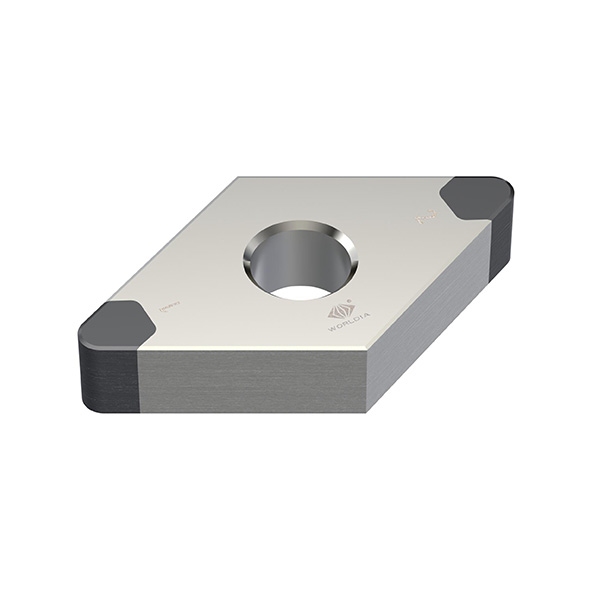
How Should Buyers Compare PCBN Inserts, PCD는 PCBN Cutting Tools and Supplier Evidence?
Supplier comparison should connect a recommendation to evidence. For PCBN for case hardened steel, request hardness range, hardened-zone depth, allowance, interruption pattern, rigidity, holder interface, and target roughness. Ask how the supplier selects grade, edge preparation, chip control, and inspection. The same discipline applies when reviewing PCD PCBN cutting tools: PCD generally serves abrasive non-ferrous or non-metallic materials, while PCBN serves hardened ferrous families. Mixed programs require feature-by-feature validation.
Which Specifications and Trial Metrics Prove Insert Fit?
A credible trial defines the baseline tool, cutting conditions, batch size, tool-life endpoint, roughness limit, dimensional tolerance, and cost calculation before production starts. Inspection records should identify grade, geometry, edge preparation, holder, and revision. If a PCBN insert fails, the supplier should document whether the cause was grade, edge strength, rigidity, thermal control, or parameter mismatch.
When Is a PCD는 PCBN Combination More Appropriate Than One Material?
The term PCD PCBN cutting tools can describe a portfolio or mixed process, not one universal material. PCD may suit aluminium alloys, composites, graphite, carbide, or other abrasive non-ferrous work, while PCBN is usually evaluated for hardened steel, cast iron, sintered iron, and powder metallurgy. Material boundaries should be set by workpiece and feature, then confirmed with a controlled trial.
How Can Worldia Support PCBN Insert Selection and Lifecycle Performance?
Worldia supports PCBN insert evaluations with documented material, grade, shaping, coating, precision grinding, polishing, inspection, and traceability capabilities. The portfolio includes PCBN 도구 alongside PCD and CVD diamond routes. Our approach starts with the drawing, hardness, material group, allowance, interruption pattern, machine condition, and acceptance target. We then connect the PCBN material and edge design to a standard or customized route.
Which Worldia Capabilities Can Buyers Evaluate?
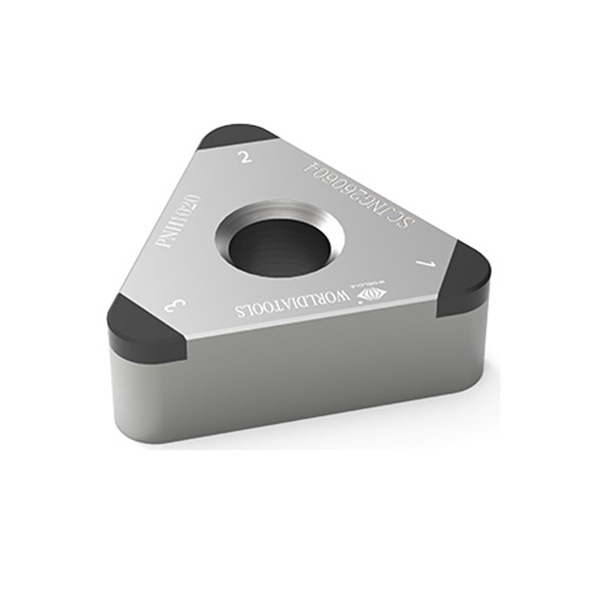
Our team can discuss grade selection, edge preparation, chip control, coating options, holder interfaces, inspection records, and reconditioning requirements. The documented PNS and PNH examples show why a PCBN insert should be selected by process conditions rather than by a catalogue label. Regrinding, retipping, relapping, and polishing can be considered when design and economics support lifecycle recovery.
What Application Data Should Buyers Share for a Worldia Review?
Provide the drawing, material and hardness, feature type, allowance, tolerance, roughness target, continuity, machine and holder details, coolant, current tool, parameters, failure mode, and production volume. Our team can use that information to define a controlled trial and clarify whether a standard insert, custom edge, or different PCBN material grade is appropriate.
FAQ는
Q: Is PCBN for powder metal the same as PCBN for case hardened steel?
A: No. Powder metallurgy can impose abrasive and interrupted conditions that require a specific balance of CBN content, wear resistance, and toughness. Case-hardened steel selection depends on hardness profile, hardened-zone depth, allowance, continuity, and finish. Both applications need representative trials.
Q: When should a buyer consider solid PCBN for hard cast iron or PCBN for valve seat machining?
A: Consider construction only after checking rigidity, geometry, thermal behavior, allowance, and the required surface result. Solid PCBN may be relevant for a particular design, while valve-seat work requires profile and bore data before a grade or edge can be validated.
Q: How should a buyer validate PCBN for CV joint turning and PCD는 PCBN cutting tools?
A: Send the drawing, material, hardness, interruption pattern, parameters, holder details, and acceptance metrics. Validate tool life, roughness, dimensional stability, chips, and cost per conforming part. Choose PCD or PCBN by material family and feature, not by the search phrase alone.