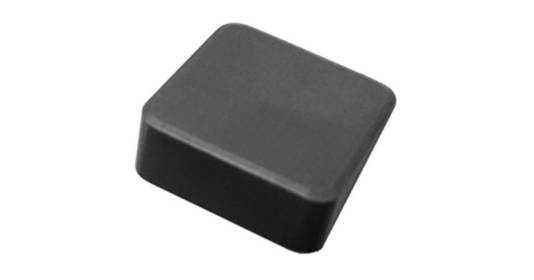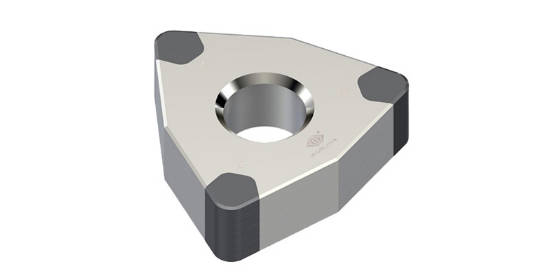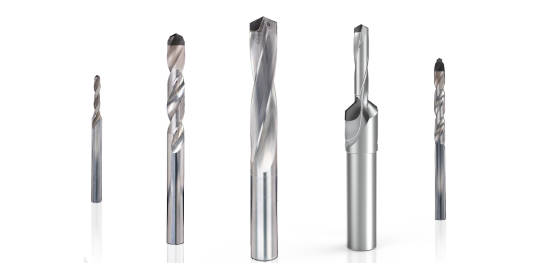

Competing demands on a cutting edge in hard turning and finishing. It should not be subjected to wear from abrasion and cutting heat, though it must maintain sufficient strength for the real interruption level. PCBN tooling is well-known for hardened steel, hard cast iron and sintered iron as cubic boron nitride maintains stability in high-temperature ferrous machining. Proper application relies on the workpiece, continuities of a cut, allowance made for machining errors or inaccuracies in finishes so as to require level surface; steadiness from machine tool vibrations.
How Do PCBN Tools Fit Hard-Turning and Finishing Decisions?
Which Workpiece Materials Make PCBN Tools Relevant?
Hard ferrous machining is the main application field for PCBN tools. Enter typical fare — hardened bearing and tool steels, chilled or hard cast irons, sintered ferrous materials and powder-metallurgy components. PCBN has high wear resistance and thermal stability, but it is compatible with iron-based materials at cutting temperature unlike diamond. PCBN provides high wear resistance and thermal stability, which is compatible with iron-based materials at cutting temperature unlike diamond.
Material name alone is insufficient. Engineers should confirm hardness range, case depth, inclusions, porosity, scale, and whether the tool will cross holes, keyways, or splines. These details change the balance required between wear resistance and impact toughness.
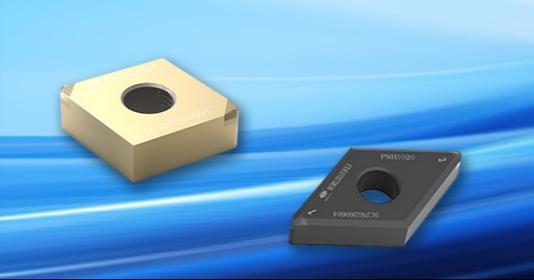
How Do Finish Requirements Change the Tooling Decision?
Hard turning may replace or reduce grinding on suitable parts, but the finished requirement must lead the decision. Dimensional tolerance, roundness, surface roughness, bearing-area characteristics, white-layer risk, and residual stress may all matter. A stable machine and measurement system are necessary before a tooling trial can demonstrate capability.
It’s certainly not cutting the edge, though. For a reasonably predictable interval, the process will have to maintain acceptable size and surface integrity. Consequently, assessing PCBN tools should be done through the progression of wear and trends in part quality as opposed to reporting a single tool-life number. The bottom line on this is PCBN tools should be evaluated not by a one-number tool-life figure but rather through projections of wear and part-quality trends.
How Should PCBN Inserts Match the Type of Cut?
When Is PCBN for Continuous Cuts Appropriate?
The thermal and mechanical load from continuous turning is more or less stable. Provided that the workpiece is rigid enough and the allowance controlled, then this condition can favour grades/edge preparations optimised by wear resistance. Testing of PCBN in continuous cuts is usually carried out in finish machining operations, where predictable flank wear is considered to be more favorable than a sudden edge failure.
High wear resistance does not remove the need for edge-strength control. An edge preparation that is too heavy may raise cutting forces, while an edge that is too sharp may be vulnerable during entry or exit. Feed, depth of cut, and nose radius must be compatible with the prepared edge.
How Much Edge Strength Is Needed for Interrupted Cutting?
With interrupted cuts, the edge is loaded and unloaded multiple times. Not to mention that keyways and cross holes, uneven stock or scale —or a segmented surface can cause impact and thermal cycling. Operationally, this type of processing usually requires a more dense PCBN grade with greater edge preparation or moderated cutting data than that required for fully continuous finish cut. These operations usually call for a more robust PCBN grade, heavier edge preparation or tempered cutting data as opposed to the entirely constant finish cut.
The interruption class must be rather than only “interrupted”. Predictable, light interrupts differ from heavy impact or unstable engagement. The PCBN-Einsätze have to be tested in representative entry angles, allowance and fixture conditions within the framework of a risk assessment so that chipping is not an issue when putting them on production release. Optimization of PCBN inserts should be done at realistic entry angles, allowance and fixturing conditions so that the risk for chipping can be evaluated prior to production releases.
Where Does PCBN Fit in High-Speed Continuous Turning?
How Do Heat and Wear Affect PCBN for High Speed Continuous Turning?
PCBN for high speed continuous turning is an application condition, not a some-kind-universal grade for high-speed cutting but useful chip formation and characteristics of PCBN with the help offor hot-hardness technology abilities are absolutely positive, it can accelerate material flaking or crack acceleration through inserts when high heats flows. Make sure you have a going continuous cut and hard setup.
Baseline information should be collected from the source of supply and then subjected to experimental trials. Speed should never be increased in isolation without feed and depth of cut. Wear mode, spindle load, part temperature size trend and surface quality should be monitored by the process team. Monitor wear mode, spindle load, part temperature and size trend and surface quality for the process team
Which Trial Results Show Repeatable Finishing Performance?
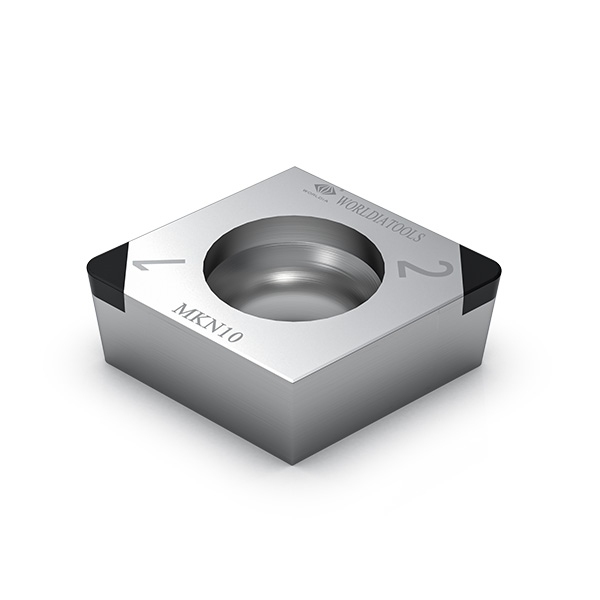
Reason A practical test defines how much “good” parts are manufactured up until a life-limited condition. Instead of checking only the first and last components, it needs to record roughness and dimensional results at intervals. For distinguishing normal flank wear from chipping, notching or thermal damage edge images are helpful. In the second case, the use of edge images enables perception to resolve normal flank wear versus chipping notching or thermal damage.
It is very important to be able to repeat it across more than one edge. Just because one positive feature appears on a PCBN tool does not mean that it will result in the reliable production of parts. Pitch, clamping torque, holder condition and offset procedures should be controlled. During the comparison, seat and support research should be controlled inserted into torque holder condition offset
How Do Valve Seats and Powder-Metal Parts Change PCBN Selection?
What Makes PCBN for Valve Seat Machining Application-Specific?
The geometry, surface finish requirements, and concentricity specifications of the valve seat machining must be met by PCBN as well as understanding the composition of their particular application. Variable level of engagement cut can be some where the tool form exert pressure at a particular point on that edge, due to which we have declared rough and finish. Hence, material type/grade, tool preparation at the edge and geometry of the cutting flute combined with a few parameters such as runout on spindle bearing system have to be evaluated in terms of collective performance.
One seat material recommendation should not be carried over to another. Material specification, insert or form-tool design, number of seats per edge, dimensional trend and failure mode are the parameters a Production team must study with reference to existing solution. The production team needs to see material specification, insert or form-tool design and number of seats per edge as well as the dimensional trend and failure mode for the current solution.
Which Grade Factors Matter for PCBN for Powder Metal?
Everything from abrasive constituents, porosity and interrupted engagement to hardness variation are injected into powder-metallurgy components. PCBN for powder metal would possibly necessitate high wear resistance at some point of uninterrupted cutting or increasing toughness to withstand mild and heavy interruptions. The ideal balance is characterized by density, composition, heat treatment and allowance as well as feature geometry. The right balance depends on factors such as density, composition, heat treatment allowance and feature geometry.
Verified application guidance distinguishes grades for continuous, light-interrupted, and heavy-interrupted powder-metal cutting. This reinforces a central rule: application class and cut condition must be reviewed together.
How Does Worldia Clarify PCD vs. PCBN for Turning Hardened Steel?
Why Does Workpiece Material Set the PCD or PCBN Boundary?
The question of PCD vs. PCBN for turning hardened steel is primarily a material-compatibility decision. PCD is commonly used for aluminum and other non-ferrous or abrasive nonmetallic materials. PCBN is the relevant superhard option for hardened ferrous materials because CBN maintains chemical stability with iron at cutting temperature.
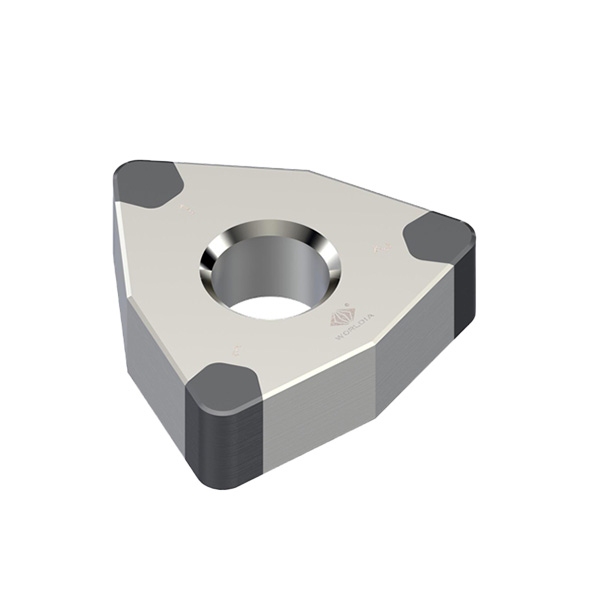
PCD and PCBN tooling is supplied by Worldia, enabling the recommendation to start from workpiece rather than a whole family of tools. Worldia checks hardness, material group, cut continuity and finish requirements, etc. to offer a grade and edge concept. Before indeed proposing a grade and edge concept, we can audit hardness, material group, cut coherence according to the composite stream line on which an extraordinary essential edge handles.
How Should Cut Continuity and Application Risk Guide the Choice?
After the material boundary is clear, the recommendation should address wear, impact, rigidity, and failure risk. We can support qualification with application-specific PCBN options, controlled edge production, and traceability. The production trial should still define acceptance limits and document performance under the buyer’s actual conditions.
FAQ (häufig gestellte Fragen)
Q: Are PCBN Tools Only Used for Finishing?
A: No. Finishing is a major application, but some heavier or interrupted operations can use PCBN when grade toughness, edge strength, rigidity, and allowance are suitable.
Q: Can PCBN Be Used in Interrupted Cutting?
A: Yes, but the interruption level must be classified. Tougher grades, stronger edge preparation, and adjusted cutting data may be necessary.
Q: When Is PCBN Preferable to PCD for Hardened Steel?
A: PCBN is generally preferred for hardened ferrous steel because of its chemical and thermal compatibility. PCD is normally associated with non-ferrous and abrasive nonmetallic materials.