
When hardened steel or cast iron must hold a tight size over a production run, tool choice affects more than edge life. CBN inserts for hard turning can preserve a predictable edge under high thermal and abrasive loads, while carbide may lose stability as wear changes the nose geometry. Material fit, edge preparation, machine rigidity and cutting conditions must work together. This article compares CBN/PCBN with carbide for dimensional control and efficiency, then lists what a buyer should verify.
What Is a CBN Insert and Why Does PCBN Suit Hard Turning?
How Do CBN and PCBN Differ in Hard Turning?
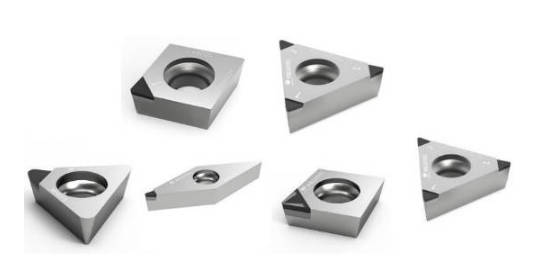
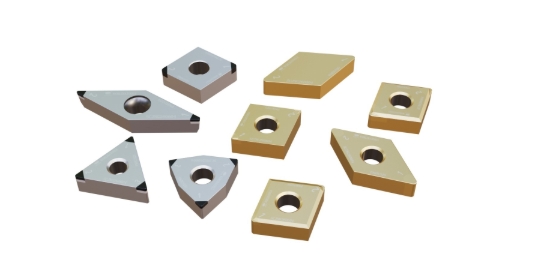
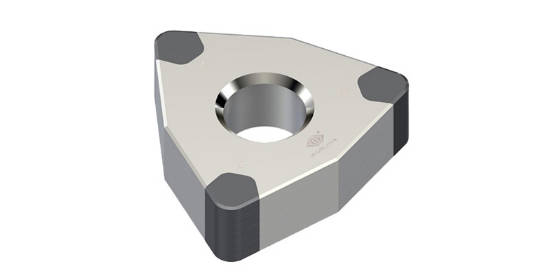
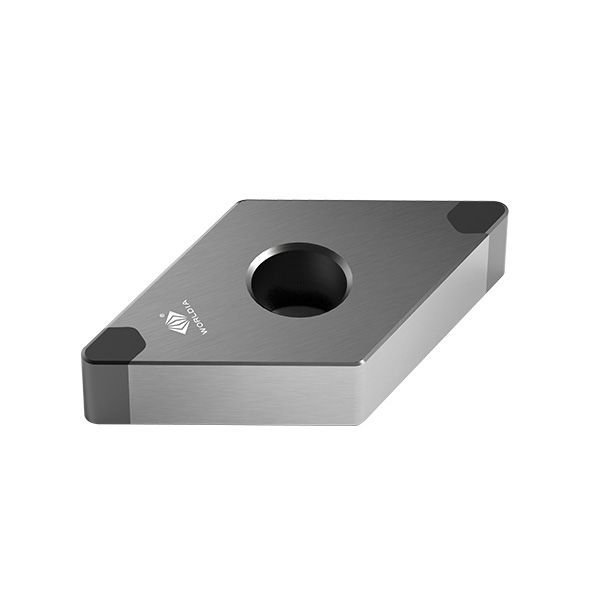
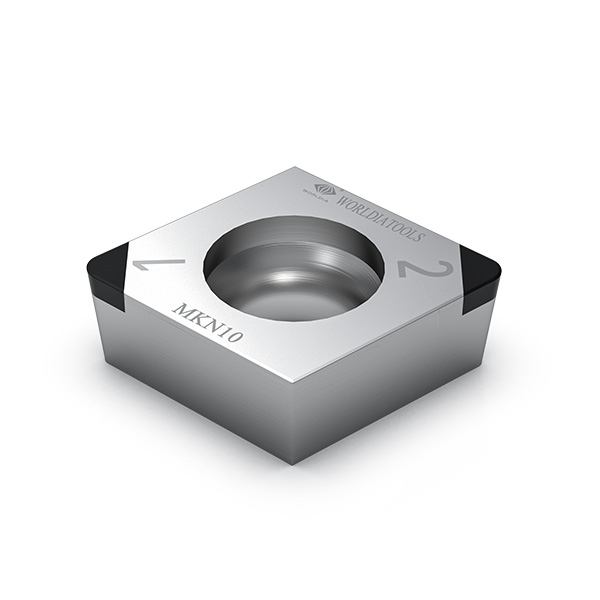
CBN means cubic boron nitride, while PCBN is a polycrystalline cutting material made by sintering CBN particles with a binder. A CBN insert is a finished insert with a CBN-based cutting region; PCBN inserts describe the polycrystalline form commonly selected for production tooling. Grade, binder, grain structure and edge design determine behavior in a specific cut.
How Do PCBN Properties Support Dimensional Stability?
PCBN combines high hardness with wear resistance and thermal stability. Compatibility with hardened ferrous materials supports dry or controlled-coolant cutting where a softer edge would wear quickly. A working layer can improve heat and wear resistance, a bonding layer can strengthen the interface, and a tougher CBN structure can tolerate engagement changes. Correct setup remains essential, but these properties slow wear-driven geometry changes that cause size drift.
How Do CBN Inserts for Hard Turning Improve Dimensional Stability?
Dimensional stability comes from keeping the cutting point consistent. CBN inserts for hard turning help when the selected grade resists abrasive wear and the edge is matched to the engagement pattern. A stable nose produces a more repeatable relationship between programmed tool position and the machined surface, reducing the need to compensate for rapid edge recession. The result is most visible in finishing operations where a small change in nose form can affect diameter, roundness or surface texture.
Which CBN Turning Insert Geometry Controls Wear and Chipping?
CBN turning inserts can use sharp, standard or strong edge preparations. A sharp edge suits light finishing when cutting forces must remain low; a stronger edge suits interrupted engagement or a larger allowance. Chipbreakers also matter. CBRB and CBC1 designs are specified to improve chip breaking in quenched-steel work within their stated cutting-depth range. Better chip control helps prevent wrapping, scratching and unstable contact, but geometry must match the workpiece, holder and pass strategy.
How Do Rigidity and Thermal Control Protect Accuracy?
Even the best CBN tooling cannot compensate for a flexible setup. A larger handle, short overhang, high-strength clamping and generous workpiece contact reduce vibration and deflection. Thin-wall parts need extra support. Thermal control is equally important: intermittent cutting may run without fluid, while wet hard turning requires consistent flow and stable workpiece temperature. These controls keep insert engagement and measured size from changing unpredictably.
How Do PCBN Inserts Improve Efficiency Compared with Carbide?
Efficiency is more than cutting speed. PCBN inserts can improve cell output when wear resistance maintains the edge through more parts, fewer corrective offsets and fewer unplanned changes. PCBN is relevant to hardened steel, cast iron, sintered iron and powder-metallurgy components, where carbide remains a useful baseline but may offer less wear margin at high hardness. Compare good parts per edge, passes per component, adjustment frequency, changeover time and downstream stability.
When Can PCBN Reduce Passes and Tool Changes?
A PCBN solution can reduce passes when grade, edge strength and depth of cut remove the allowance in a controlled sequence. It can reduce tool changes when wear stays gradual enough for planned replacement. Outcomes depend on hardness, interruption, allowance, machine condition and holder. Application examples are condition-specific; record cutting conditions and component features before treating a comparison as meaningful.
Which Cutting Conditions Keep CBN Inserts Efficient?
The grade must follow engagement. PNH0120 is listed for continuous machining, PNH1020 for light intermittent work, PNH2018 for intermittent work and PNH3019 for heavy interrupted machining. These are selection guidance, not universal recipes. Validate speed, feed, depth of cut, coolant and edge form in a controlled trial. When CBN inserts for hard turning are evaluated this way, gains can be separated from a different allowance, fixture or machine setting.
How Should Tool Material Be Selected for Hardened Steel: PCD or PCBN?
Why Is PCBN Better Matched to Hardened Ferrous Work?
PCD and PCBN solve different material problems. PCD combines diamond particles with a cemented-carbide substrate and is mainly associated with non-ferrous metals and non-metallic materials such as aluminum, composites, ceramics, stone and graphite. PCBN is designed for ferrous materials including hardened steel and cast iron. Therefore, PCD vs. PCBN for turning hardened steel is usually a material-compatibility decision: start with PCBN for hardened ferrous work, then refine grade and edge for continuity, hardness and allowance.
What Should a Buyer Record Before Ordering CBN Inserts?
Before ordering CBN turning inserts, record workpiece material and hardness, feature geometry, allowance, continuous or interrupted engagement, target tolerance, surface finish, machine power, holder, workholding and coolant. Insert shape, nose form, edge preparation and chipbreaker should follow those facts. This gives a supplier enough context to recommend a grade rather than quote a generic CBN insert.
How Can Worldia Support CBN Inserts for Hard Turning?
À Worldia, we connect PCBN turning inserts with grade selection, edge engineering and application review for demanding hard turning. Product information identifies PCBN grades and edge variants for different engagement conditions, while marking and batch identification support traceability. For a buyer comparing PCBN inserts, the useful discussion is not only “which grade?” but also “which workpiece, allowance, holder and interruption pattern?”
Which Worldia PCBN Products and Services Fit?
Worldia can review a hard-turning requirement around PCBN turning inserts, chipbreaker options and custom superhard tooling. The discussion can cover material classification, cutting continuity, edge strength, coating or working-layer needs and the dimensional target. Precision grinding, lapping, inspection, assembly and setting support can also be considered, so a quotation reflects complete tool condition rather than an insert name alone.
What Evidence Should a Buyer Request from a CBN Supplier?
For a CBN insert supplier, request grade identification, edge and geometry details, batch or serial traceability, application limits and the assumed cutting conditions. Application engineering should address the workpiece, fixture, machine and production cycle. Where applicable, define retipping, relapping, inspection and follow-up support before release. This evidence makes a carbide comparison more reproducible and separates material advantage from setup problems.
FAQ (questions fréquentes)
Q: What is the CBN insert full form, and is CBN the same as PCBN?
A: CBN is cubic boron nitride. PCBN is the polycrystalline form used to make many production cutting regions and inserts. A buyer should evaluate the complete grade, binder, edge and application rather than treat the two terms as interchangeable specifications.
Q: Are CBN inserts for hard turning always better than carbide tools?
A: No. CBN inserts for hard turning are generally considered when hardness, wear and thermal load make carbide unstable or costly to run. Carbide can remain suitable for lower-hardness or different material conditions. A controlled comparison should use the same component requirements and measure good parts, adjustments, passes and tool changes.
Q: How does choosing between PCD and PCBN affect turning hardened steel?
A: In PCD vs. PCBN for turning hardened steel, PCBN is normally the relevant starting point because PCBN is intended for hardened ferrous materials. PCD is more commonly selected for non-ferrous and non-metallic work. The final choice still depends on hardness, interruption, allowance, tolerance and machine stability.