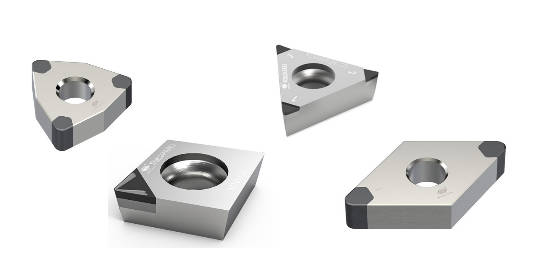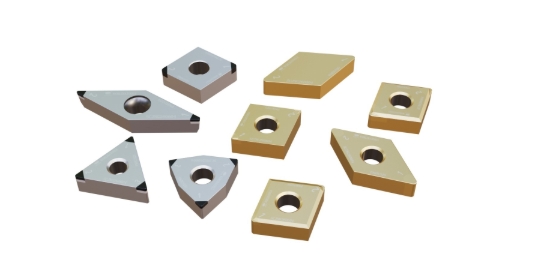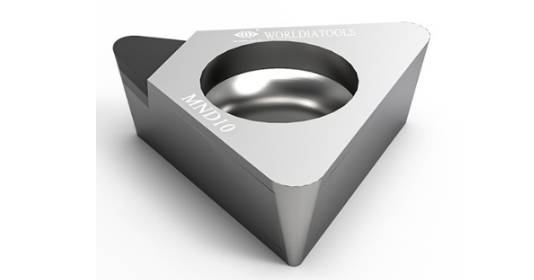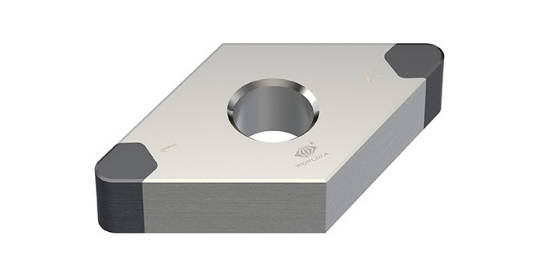

Industrial machining does not use one superhard material for every difficult cut. PCD PCBN cutting tools serve different workpiece families because heat, chemical affinity, hardness, and abrasiveness change the load on the edge. PCD is generally evaluated for abrasive non-ferrous and non-metallic materials, while PCBN is commonly selected for hardened ferrous materials. Selection also depends on the operation, finish, process stability, and cost per conforming part.
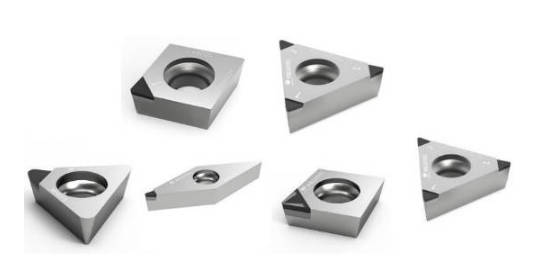
Why Do Workpiece Materials Separate PCD and PCBN Cutting Applications?
The first question is whether the cutting material remains chemically and mechanically stable against the workpiece. PCD PCBN cutting tools therefore need separate application maps. A material that performs well in aluminium or graphite should not automatically be expected to machine hardened steel, while a hard-turning grade may be unnecessary for non-ferrous finishing.
Which Non-Ferrous and Abrasive Materials Favor PCD Tools?
Outils PCD are widely considered for aluminium alloys, metal-matrix composites, graphite, hard rubber, wood-based materials, and other abrasive non-ferrous or non-metallic workpieces. Fine-grain PCD can support edge quality, while coarser or mixed-grain structures emphasize abrasion resistance and edge strength. High-silicon aluminium and MMC components often create heavy wear. Selection must still account for interruptions, allowance, roughness, and edge geometry.
Which Hardened Ferrous Materials Favor PCBN Tools?
PCBN tools are typically evaluated for hardened steel, cast iron, sintered iron, and powder-metallurgy components. PCBN combines high hardness with thermal and chemical stability for ferrous machining. Grade composition balances wear resistance, impact resistance, and toughness. Continuous hardened-steel finishing may require a different grade and edge preparation from heavy interrupted cast-iron cutting.
Where Do PCD Cutting Tools Add Value in Industrial Production?
PCD creates value where abrasive constituents, production volume, or surface requirements make rapid edge wear expensive. A stable edge can reduce dimensional correction, tool changes, scrap, and machine interruption.
How Do Automotive, Aerospace and Electronics Components Use PCD?
Automotive and e-mobility programs use PCD for aluminium motor housings, battery housings, chassis parts, cylinder heads, transmission housings, and brake-related components. Aerospace production applies PCD to aluminium and composite features where abrasion and finish control matter. Electronics programs also use PCD for non-ferrous, graphite, and engineered non-metallic parts. Tool choice should follow the feature: a bore, sealing face, shoulder, profile, or precision hole may require a different body and edge.
Which Milling, Drilling and Finishing Operations Need PCD Edge Control?
Face and shoulder milling require suitable insert geometry, lead angle, corner design, runout control, and wiper configuration. Drilling and reaming depend on diameter accuracy, point geometry, and chip evacuation. Turning and profile cutting add edge-strength and contour demands. PCD grain and edge preparation balance sharpness, finish, and wear resistance. Therefore, PCD PCBN cutting tools should be specified by operation and feature, not only by material.
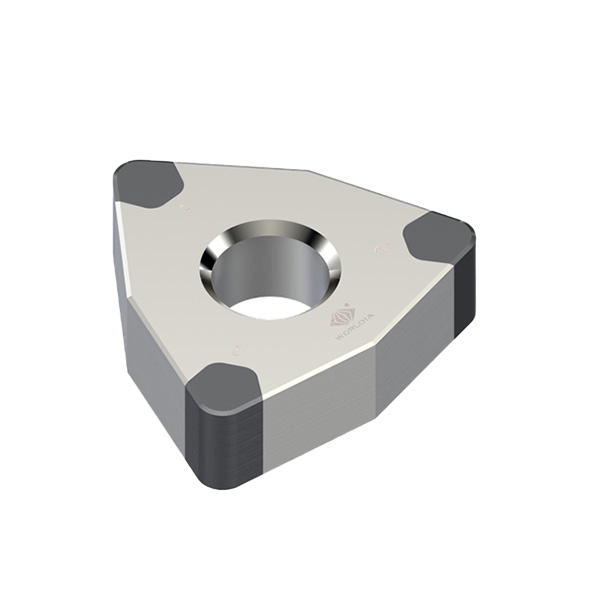
Where Do PCBN Cutting Tools Solve High-Hardness Machining Problems?
PCBN becomes relevant when hardened ferrous materials cause rapid abrasion, heat, and edge breakdown. Within a PCD PCBN cutting tools program, PCBN covers ferrous applications outside the normal PCD range. Typical operations include hard turning, finish face milling, grooving, threading, and profile finishing. Stable clamping, short overhang, controlled data, and a defined tool-life endpoint remain essential.
How Are PCBN Inserts Applied to Hardened Steel and Cast Iron?
Gears, shafts, bearing features, and constant-velocity joint profiles can be finished with PCBN inserts when hardness, allowance, continuity, and surface requirements are known. Cast-iron applications include engine, brake, hydraulic, and machinery components. Continuous cuts may prioritize wear resistance, while interruptions require greater edge security and impact toughness. Turning, grooving, threading, and full-face milling inserts match different features.
What Changes in Powder Metallurgy and Interrupted Cutting?
Powder-metallurgy parts can combine hard phases, porosity, abrasive constituents, and interrupted contact. A wear-oriented PCBN grade may suit a stable continuous cut, whereas a tougher grade can suit repeated entry and exit. Holder rigidity, clamping strength, overhang, workpiece support, and thermal control can determine whether the edge reaches repeatable life.
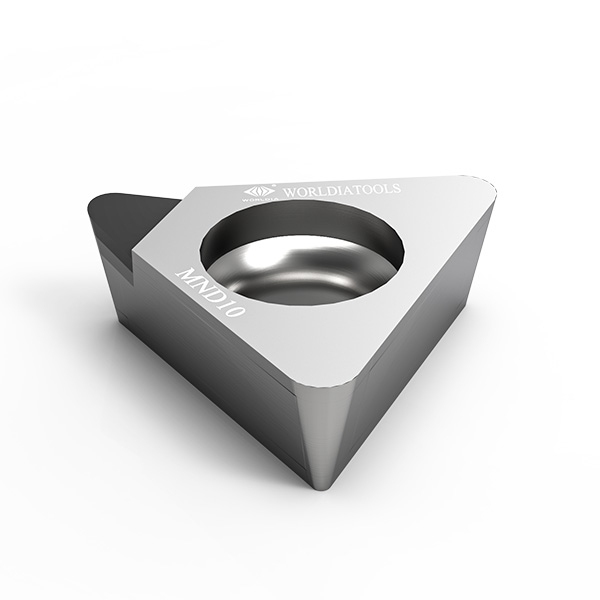
How Should Buyers Evaluate PCD and PCBN Tool Fit?
A buyer should connect every recommendation to the workpiece, feature, operation, and acceptance criteria. PCD PCBN cutting tools are best compared through controlled trials using the same material condition, machine, holder, allowance, coolant strategy, batch, and inspection method. This separates a suitable solution from a catalogue match.
Which Application Data Should Guide Material and Geometry Selection?
Useful input includes the drawing, material, hardness or abrasive phase, feature dimensions, interruption pattern, allowance, tolerance, roughness, machine interface, holder, coolant, current parameters, failure mode, and volume. PCD selection should consider silicon or other abrasive constituents. PCBN selection should distinguish continuous, light-interrupted, and heavy-interrupted cutting. These details guide grade, edge preparation, chip control, geometry, and standard-versus-custom decisions.
How Do Tool Life, Surface Quality and Cost per Part Prove Fit?
Trials should define tool-life endpoints before cutting. Wear, chipping, roughness, dimensional drift, burrs, cycle time, tool changes, and conforming output all matter. Cost per part should include usable edges, reconditioning, downtime, and rejects rather than insert price alone. Broader PCD PCBN tool material market comparisons show technology directions but cannot replace trials on the buyer’s component and process window.
How Can Worldia Support PCD and PCBN Cutting Tool Programs?
Worldia supplies PCD and PCBN inserts, indexable milling cutters, and special tools for turning, milling, drilling, reaming, boring, grooving, threading, and profile machining. Our approach starts with the drawing, material, feature, tolerance, surface target, machine, and production objective. This allows PCD PCBN cutting tools to be evaluated within a defined process.
Which Standard and Custom Tool Formats Are Available?
Worldia offers standard PCD and PCBN ISO inserts and indexable milling solutions. Custom formats include reamers, drill reamers, boring tools, end mills, profile cutters, grooving tools, threading tools, and special inserts. Our engineers compare standard and custom routes when reach, runout, contour, chip control, or multi-feature machining changes process economics.
What Lifecycle Capabilities Matter After Initial Tool Selection?
Worldia supports precision shaping, grinding, inspection, traceability, and application review. Regrinding, relapping, retipping, or polishing may extend tool life when the design permits recovery. Buyers should confirm inspection records, revision control, edge identification, reconditioning limits, and repeatability between new and serviced tools. These capabilities help our customers assess total tooling cost beyond purchase price.
FAQ (questions fréquentes)
Q: What Is the Main Difference Between PCD and PCBN Cutting Tools?
A: PCD is generally used for abrasive non-ferrous and non-metallic materials, including aluminium alloys, composites, graphite, and engineered materials. PCBN is generally evaluated for hardened ferrous materials such as hardened steel, cast iron, sintered iron, and powder metallurgy. Actual selection still depends on the operation and process conditions.
Q: Can PCD Replace PCBN in Hardened Steel Machining?
A: PCD is not normally the preferred choice for hardened-steel cutting because diamond can interact unfavorably with ferrous materials at elevated cutting temperatures. PCBN is usually the more appropriate starting point, followed by grade, edge, geometry, and cutting-data validation.
Q: What Information Should Be Sent to a PCD or PCBN Tool Supplier?
A: Send the drawing, material specification, hardness, feature, allowance, tolerance, roughness target, continuity, machine and holder details, coolant practice, current tool and parameters, failure mode, batch size, and production target. Complete application data makes the recommendation and trial plan more reliable.