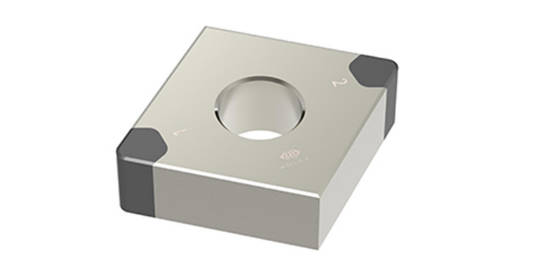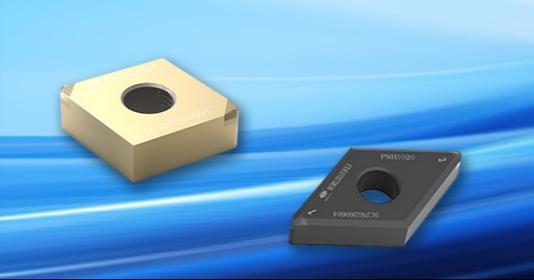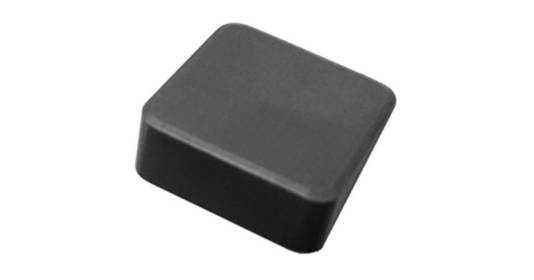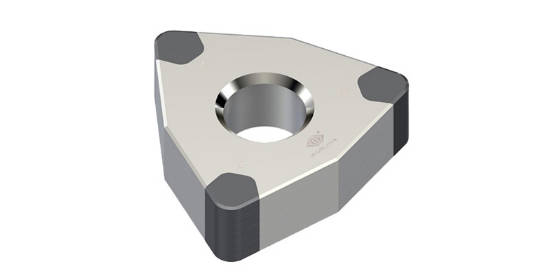

When short edge life is holding up a gear turning operation, start the insert selection process by identifying the most severe cutting interruption. During interrupted hard turning, repeated tool entry and exit generate cyclic mechanical loads and thermal variations at the cutting edge. These conditions can accelerate edge chipping, micro-fracture and localized wear, particularly when cutting hardened gear surfaces.
Show the supplier where the tool leaves and re-enters the material, and identify the primary failure mode, such as edge chipping, progressive flank wear or unacceptable surface finish. This provides a technical basis for selecting PCBN grades and edge preparations for interrupted hard turning. The same gear may require separate tooling configurations for the face and bore, even when both operations share the same hardness specification.
What Makes Gear Turning an Interrupted Cut?
Interrupted Cuts on Gear Faces and in Bores
Mark every place the tool crosses an opening. On a face, this might be a groove or a row of drilled holes. In a bore, it could be a keyway or a cross hole. Show the cutting direction, interruption width and where the insert re-enters the material. The frequency of tool entry and exit, the length of each interrupted section and the severity of the initial impact all affect cutting stability and edge life.
If interruptions occur only in part of the pass, mark that region as well. When asking for PCBN inserts for hard turning gear bores, send a section view with the bore depth, minimum clearance and holder reach. A drawing of the finished outside profile alone does not provide enough information to evaluate the actual cutting conditions.
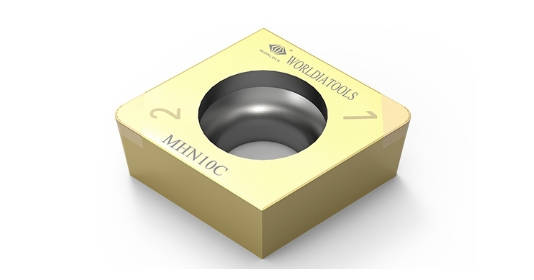
What Workpiece Details Affect PCBN Insert Selection?
For PCBN inserts for hardened steel gears, provide the material grade, heat treatment condition and hardness range at the feature being machined. Workpiece hardness and its consistency directly affect cutting resistance, tool loading and wear behavior. Record the actual machining allowance on several blanks and identify any variations, as uneven stock can cause fluctuations in cutting forces during interrupted turning.
Then provide the finished dimensions and surface roughness requirements. If the tool chips at the same point on several parts, mark that location on the drawing and include a photo of the worn insert. If the edge wears gradually and parts drift out of dimensional tolerance, provide the inspection trend. Distinguishing between mechanical edge failure and progressive wear helps the supplier determine whether grade selection, edge preparation or cutting parameters need adjustment during the trial.
How Do You Match the PCBN Grade and Edge to the Cut?
Which PCBN Grades Should You Shortlist for Interrupted Turning?
Ask the supplier to explain which PCBN insert grades for interrupted turning they would test under the most severe cutting conditions. Grade selection should consider the workpiece hardness, interruption severity, cutting speed and required edge toughness. For interrupted hard turning, the balance between wear resistance and resistance to edge chipping is particularly important.
Give them the current insert designation and record whether the failure is sudden chipping, progressive flank wear or an unacceptable surface finish. Ask for the PCBN grade, cutting-edge geometry and edge preparation of each proposed insert so the shop can identify exactly what it tested.
If both the grade and edge preparation change between trial arms, record that you are comparing two complete tooling configurations. A follow-up test can isolate one variable to determine which change produced the improvement.
PCBN Grades and Recommended Cutting Parameters
These cutting parameters should be treated as initial reference ranges rather than fixed production settings. Actual values should be adjusted according to workpiece hardness, interruption severity, insert geometry, machine rigidity and the required surface finish.
Use the grade table to shortlist candidates before asking for a trial on your gear.
CBN Insert Edge Preparation for Interrupted Turning
When reviewing a chamfer or hone, consider how the cutting-edge preparation affects edge strength, cutting forces and surface finish. A chamfered or honed edge can improve resistance to mechanical impact and reduce the risk of premature edge chipping during interrupted cutting. However, a more reinforced edge may also increase cutting forces, so the geometry must be matched to the interruption severity and machining requirements.
Ask the supplier how the proposed edge preparation is expected to perform during tool entry and exit, and what changes to monitor in the machined surface. Give the shop a way to distinguish the trial edges at the machine. Keep the holder, program and workpiece lot constant where practical, and document any setup changes. Inspect the cutting edge near the interruption and check the machined surface for dimensional deviations, roughness changes and localized damage. A configuration that prevents edge failure must still meet the drawing requirements and agreed process limits.
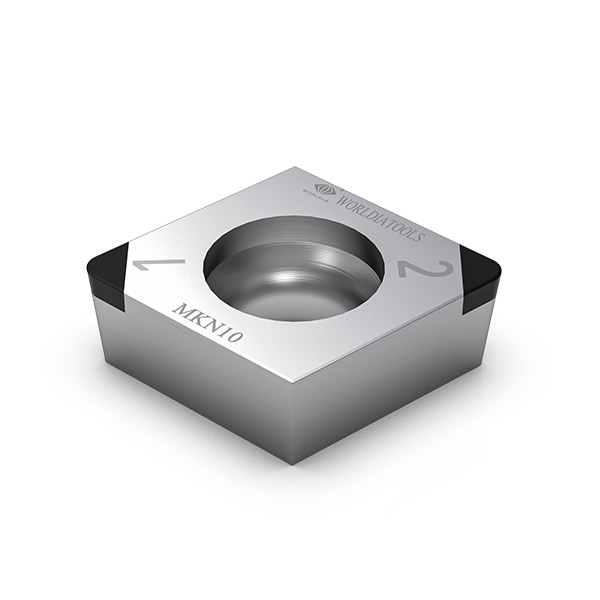
A Standard PCBN Insert in EV Gear Rough Turning
What Were the EV Gear Trial Conditions?
A published trial of Inserts PCBN for interrupted rough turning of EV gears used a quenched steel gear at HRC 58–62. The operation covered the end face and bore under dry cutting conditions. It was an interrupted roughing operation with 0.1 mm of machining allowance and a surface roughness requirement of Ra 1.6.
Those are the conditions to check before treating the case as relevant to another gear. Compare the features being cut, the stock and the roughness requirement first. If the proposed operation is a different pass, write down that difference when discussing the case with the supplier.
Tool Life Measured in Parts per Edge
The trial table recorded 100 parts per edge for the original setup and 153 for the replacement setup. These are the reported counts for that test. For your own comparison, agree on the end point before loading the first part. Record how many parts pass inspection before each edge is changed, and note whether the change follows an edge failure, a finish or size limit, or a scheduled stop. When both setups use the same acceptance rules, purchasing can compare how many usable parts each edge delivered.
What Should You Send for a PCBN Insert Recommendation?
When Should You Consider a Custom PCBN Insert?
When weighing standard vs custom PCBN inserts for hard turning, start with the insert seat, available clearance and cutting-edge geometry required by the application. Standard inserts are generally suitable when the existing holder, insert dimensions and machining profile meet the application requirements.
Give Worldia the holder and insert designations and ask which standard configuration fits the application. If the holder, part profile, bore clearance or required edge geometry rules out the standard options under review, provide a section view and explain the specific restrictions. Ask the supplier to propose a suitable custom configuration, including its insert dimensions, edge preparation and compatibility with the existing holder. The quotation should also specify the parts and setup needed for a machining trial.
What Details Does a Gear Turning RFQ Need?
Send Worldia the marked-up drawing, workpiece hardness, allowance, current tool and the location of the interruption. Include the machine and holder, dry or wet cutting conditions, the current program settings and a recent inspection record. State what caused the last insert change and how the shop decided whether the part passed. Put the face and bore in separate rows if they have different setups or failure modes. That gives the supplier a clear basis for quoting each operation.
Before ordering trial inserts, check that the supplier’s proposed designation appears on the quotation and the shop’s setup sheet. If a different edge preparation or insert seat is needed, list that difference next to the current setup. Ask how the trial insert will be identified on arrival and which holder it will use. This lets the operator match the delivered insert to the specific trial arm.
FAQ (questions fréquentes)
Q: Can the Same PCBN Grade Handle Light and Heavy Interruptions?
A: Shortlist the grade for each operation and confirm it under the corresponding cut. Record the entry points, current failure and required finish separately. If you want to use one grade for both operations, qualify it on both before including it in the production order.
Q: Does PCBN Bore Turning Need a Different Setup?
A: Review the bore depth, holder clearance and reach before copying the face setup. Send the supplier the bore section and the current bar designation. Mark any internal opening the edge will cross and include the inspection locations on the drawing. The hard-turning setup guide calls for the shortest tool overhang, a larger holder and high-strength clamps. For thin-walled workpieces it also calls for a larger clamping area.
Q: Which PCBN Trial Metrics Matter Beyond Tool Life?
A: Measure the dimensions and surface roughness used for release, and record whether the edge wore gradually or chipped. Include changeover time and any parts rejected at the end of the run. Compare those records with the parts-per-edge count to make a purchasing decision.