

What Are Polycrystalline Diamond Cutting Tools and How Do They Function?
Composition and Structure of Polycrystalline Diamond (PCD)
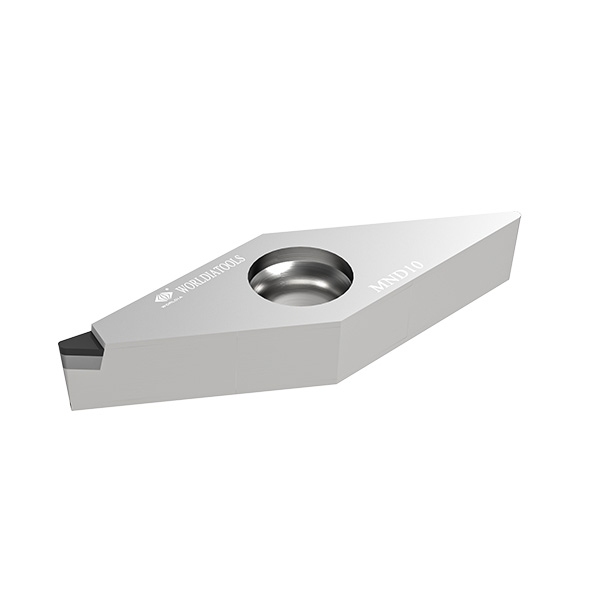
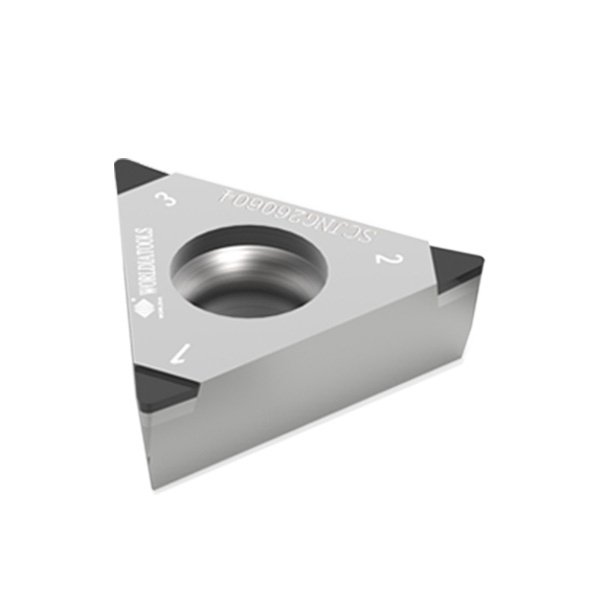
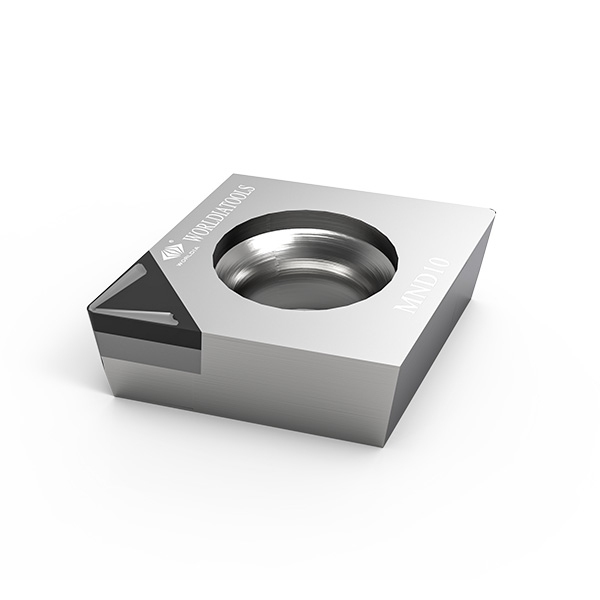
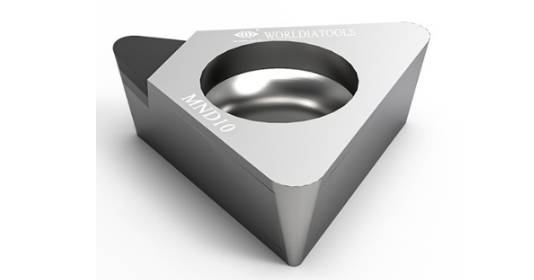
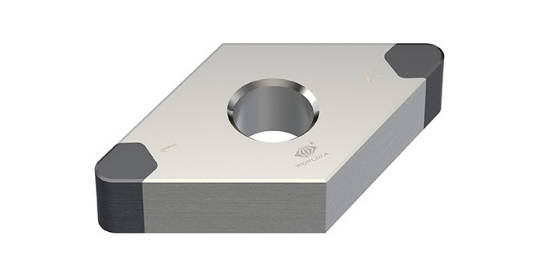
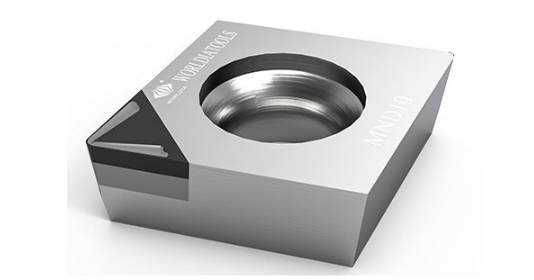
Polycrystalline Diamond (PCD) is made of diamond grains embedded in a cemented carbide substrate and sintered under high temperature and high pressure.. The result is a strong composite material, which by virtue of its high wear resistance, is very suitable for cutting, and the high toughness of the carbide substrate is used to keep the diamond grains from breaking mechanically.
The bond between the diamond grains and the carbide substrate ensures that the tool does not break during the cutting process. The specific microstructure of PCD produces a combination of high wear resistance and high toughness, enabling the tool to withstand hard cutting conditions. Furthermore, the uniform grain size distribution is retained in the final product and ensures constant cutting performance during long production periods.
How Do PCD Cutting Tools Work in Machining?
The hardness of polycrystalline diamond tools allows them to be cut precisely without any wear. The low friction coefficient of PCD tools prevents heat generation, and thus no tool deformation occurs during high-speed cutting. The very sharp cutting edges of the PCD inserts allow for a very fine surface finish when cutting hard materials such as composite materials and ceramic materials. PCD tools have a very high thermal conductivity. This means that heat can be dissipated very effectively from the cutting zone. As a result, even under continuous cutting operations, the tools allow for high precision and a long tool life.
Which Materials Are Polycrystalline Diamond Cutting Tools Most Effective For?
Applications in Non-Ferrous Metals
Polycrystalline diamond tools are particularly effective for machining non-ferrous metals such as aluminum alloys, copper, and brass. These materials have low chemical affinity with diamond, preventing adhesion or diffusion wear that typically occurs with ferrous metals. As a result, polycrystalline diamond tooling offers longer service life compared to conventional carbide tools. In industries such as automotive and aerospace manufacturing, PCD tools are widely used for producing precision components like engine blocks, transmission housings, and structural parts where surface finish and dimensional tolerance are critical. For electromobility, Worldia cites as core applications the machining of aluminum components such as motor housings, battery compartments, and chassis components.
Performance on Composite Materials
When machining CFRP or GFRP parts, polycrystalline diamond cutting tools, like PCD cutting tools, retain their sharpness. The diamond grains are strongly bonded, which prevents them from chipping off at the cutting edge. This prevents severe delamination and ensures excellent surface integrity. The tools are also able to cut through layers of fibers without any problems. This allows for precise parts with exact dimensions and prevents subsequent processing. Aerospace as well as sports equipment manufacturers benefit from these features of PCD cutting tools.
Suitability for Ceramics and Hard Non-Metallic Materials
Another range of work pieces that are particularly suited to the use of polycrystalline diamond tools are ceramics, graphite, stone and other brittle non-metallic materials. As these are materials that are readily worn by carbide tools and can easily be cracked or split, such as by minor surface defects, the high hardness and wear resistance of PCD, combined with its cut which does not produce such surface defects, makes it an ideal tool material for these types of materials. High quality industrial components, such as those that require a highly polished surface finish or very tight dimensional tolerances, are typical examples of work that are well suited to the use of PCD tools for extended periods.
How Do PCD Tools Compare With Other Cutting Tool Materials?
Comparison With Tungsten Carbide Tools
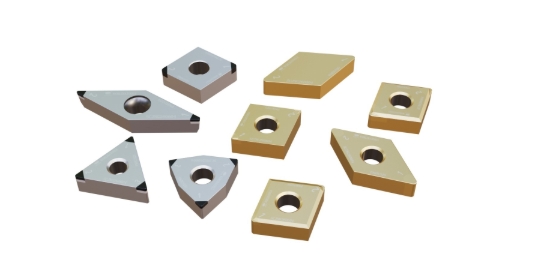
Although tungsten carbide tools save money on most turning jobs, non-ferrous or abrasive materials need something tougher. Polycrystalline diamond tools give far better wear resistance and longer life than carbide versions in these cases. The iron in ferrous metals reacts with diamond once heat builds up. Carbide stays chemically stable at high temperature, so it works better for machining steel. The final choice between the two materials depends on turning volume, workpiece type, and the surface finish needed.
Advantages Over Coated Tools in High-Speed Machining
In high speed machining, where coated carbide tools tend to lose their coating due to excessive heat generation, the PCD tool is maintaining its integrity. Its thermal stability prevents distortion at high cutting forces or long periods of operation. Due to the long tool life of PCD cutting tools, the number of regrinds and tool replacements is kept to a minimum during long running jobs, thus reducing machine downtime and overall tool cost. Good tool to tool cut quality is maintained from tool to tool.
What Factors Influence the Performance of Polycrystalline Diamond Tools?
Impact of Cutting Parameters on Tool Life
The tool life can be significantly influenced by the feed rate, the spindle speed and the cutting depth during the machining process. High parameters can lead to small chipping at the edge of the tool or increase the wear of the tool through abrasion. With the suitable choice of the parameters for the material as well as for the machine, the tool life can be extended considerably. In order to keep the temperature in the cutting zone constant during long machining cycles, the cooling is also important. Air blast or minimal lubrication are typical methods. In order to guarantee the precise dimensional measurement, the temperature has to be kept constant.
Material Properties That Affect Machinability with PCD Tools
The machinability of different work materials by means of polycrystalline diamond cutters is influenced by the abrasive, toughness and thermal conductivity properties of the work material. Non-ferrous metals, by their nature, have low chemical reactivity with diamond and thus are best machined with polycrystalline diamond cutters for both roughing and finishing operations. The machinability of work materials can, however, be negatively affected by surface contaminants, coatings, etc., as these can affect the friction on the cutting edge and moreover cause local wear on the tool edge.
Worldia Contribution to Advanced PCD Cutting Solutions
Overview of Expertise in Diamond Tool Manufacturing from Worldia
As a Chinese tool manufacturer, 世界 is concentrating on processing tasks of highest precision, maximum processing reliability and cost efficiency. These areas of application are divided into the sectors of emobility, aerospace as well as medical, energy and electronics and finally the sector of tool and mold making.
We continuously work on the further development of our products and services in order to be able to offer the best for your needs in the constantly changing world of manufacturing. Superhard cutting tools, combined with the latest sintering technologies and sophisticated tool designs, are the core of Worldia portfolio.
A variety of our polycrystalline diamond cutting tools is designed for the precise processing of all kind of materials and can be used for the processing of e-motor housing parts as well as for processing aerospace components of highest complexity which require a precise and exact dimension within a tolerance range of some tenths of a millimeter.
Key Features of Worldia’s Polycrystalline Diamond Cutting Tools
Durability and Precision Engineering
Our polycrystalline diamond tooling has extremely high hardness and a long service life, allowing it to operate in very harsh industrial environments. All inserts are carefully engineered to guarantee equal grain distribution within the sintered insert structure. This allows for a constant and stable tool performance over multiple work cycles.
Versatility Across Applications
Worldia’s polycrystalline diamond cutting tools are versatile enough to cut not only aluminum alloys used in the lightweight structures of new generation vehicles but also composite materials used for aircraft’s interior panels. They also efficiently process hard ceramics and graphite due to their high abrasion resistance.
品質保証基準
Worldia is built on three pillars: quality, traceability, and manufacturing depth. Each product is produced under Worldia’s strict manufacturing process and is assigned a unique manufacturing number that allows it to be traced back to the specific production stages. We strictly follow the standards of the ISO 9001/GB/T 19001 certification and use the best measuring devices from Switzerland, Germany, Japan, and other countries to check the dimensional accuracy of every delivery in large batches.
FAQ
Q: Can polycrystalline diamond cutting tools be used on steel?
A: No, they are not recommended for steel or other ferrous metals because iron reacts chemically with diamond at high temperatures causing rapid degradation.
Q: How long do polycrystalline diamond cutting tools typically last?
A: Tool life varies depending on workpiece material properties and machining parameters but can last several times longer than carbide equivalents when applied correctly.
Q: Are polycrystalline diamond cutting tools worth the investment for small-scale manufacturers?
A: Yes, especially if your operations involve frequent machining of non-ferrous alloys or composite materials since reduced downtime combined with extended service intervals often compensates for higher initial costs through improved productivity over time.