
Short carbide life is one warning sign. So are tool changes that keep breaking the production run, or a grinding step that may no longer be earning its place. Put PCBN on the trial list, by all means, but let the job make the final call. The things to check are ordinary ones: material condition, stock, rigidity, interruptions and finish.
When Are PCBN Cutting Tools Essential for Hardened Steel?
How Do Hardness and Finishing Requirements Define the Need?
Heat is only half the trouble with hardened bearing steel, tool steel and case-hardened parts. The other half is abrasion. PCBN keeps cutting hardness in that hot environment and has little chemical reaction with ferrous work, which explains its use for finishing after heat treatment.
Then look at the drawing. Can turning hold the size, form, roundness, roughness and surface-layer condition? Sometimes it can, and a grinding operation can be reduced or removed. Sometimes it can’t. A combined route is perfectly reasonable when turning alone won’t meet the feature.
Which Production Problems Can PCBN Cutting Tools Address?
Predictable wear is the prize. It lets the shop schedule an insert change instead of reacting to one, and the finish is less likely to drift without warning. Dry cutting might be workable too. That belongs in the trial, not in the assumptions made before it.
A broken edge and a worn edge are different clues. Chipping sends the team toward toughness and edge preparation; gradual wear sends it in another direction. When the size jumps only after an insert change, inspect the holder, seat and clamp before blaming the grade.
How Does Cut Continuity Affect PCBN Tool Selection?
When Are PCBN Tools Suited to Continuous Cuts?
On an uninterrupted OD, face or bore, the load is comparatively calm. Wear resistance can take priority, with an edge prepared for continuous engagement. The goal is repeatability across edges. One exceptional insert followed by three poor ones doesn’t help a production schedule.
Even here the load moves. There is an entry and exit, plus whatever runout and stock variation the part brings. Set speed, feed and depth to avoid rubbing, then judge a group of edges against the size and finish records.
How Should Edge Strength Be Increased for Interrupted Cuts?
A cross-hole or keyway gives the edge a knock; splines, gear features and uneven stock can keep doing it throughout the pass. That may justify a tougher grade, more hone or chamfer, tighter clamping and less ambitious data. Describe the actual engagement. Calling it a ‘medium interruption’ tells the next operator very little.
There is a trade-off here. A very strong edge can also raise force, and a flexible component may show the effect. Look at the failure itself: microchips, a broken corner, a notch, or ordinary flank wear. They don’t call for the same correction.
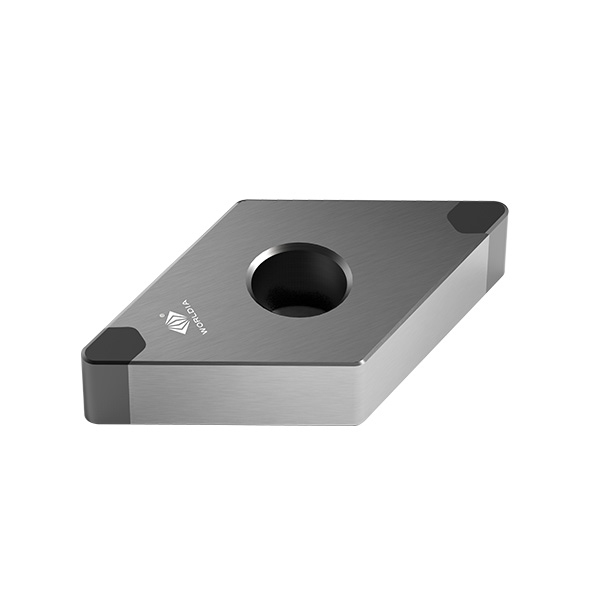
Which Hardened-Steel Applications Benefit from PCBN Inserts?
Why Are Gears, Shafts, and Bearing Components Common Targets?
Gears, shafts, sleeves, transmission components and bearing races often land on the trial list. Their working surfaces are hard, and size and finish have to repeat. A rigid setup can turn diameters, faces, grooves or bores. Case-hardened parts add one caution: uneven stock can carry the cut in and out of the hardened layer.
Do the economics per acceptable part. A higher insert price may be irrelevant if hard turning removes secondary work or gives the machine more available hours. Scrap, inspection and lost time belong in the same calculation.
How Do Precision Bores and Finishing Operations Change the Choice?
Boring exposes a weak setup quickly. Extra overhang bends, chip flow is hard to watch, and bore geometry responds to small changes in force. Use the shortest, stiffest practical bar and get runout under control. Then look at nose radius and edge preparation; both change radial force.
Measure through the full edge life. Diameter, taper, roundness, roughness and thermal drift form the useful trail. Without it, ordinary machine movement or inspection variation can look like a tooling result.
What Should Be Checked in High-Speed, Valve-Seat, and Powder-Metal Applications?
What Should Be Confirmed for PCBN for High Speed Continuous Turning and Valve Seats?
Hot hardness makes higher speed possible, but the speed dial isn’t the whole process. Hold engagement, heat flow, geometry and machine condition steady while speed is raised in steps. Otherwise a good or bad result has no clear cause.
Treat a valve seat as its own job. Seat material and tool form matter, as do runout, concentricity, finish and the way the edge moves in and out of engagement. Another seat’s setup is a useful clue, never a finished answer.
How Does Powder-Metal Composition Affect PCBN for Powder Metal?
Porosity, density, hardness, abrasive constituents and interrupted features all vary in powder-metal work. Wear resistance can dominate on a steady section; impact toughness takes over when the interruption is severe. Choose from the real composition and feature.
The family name is not enough, and neither is the broad label ‘PCBN grade’. Heat treatment, density, geometry or stock can change while the part number stays put. The tooling may need to move with those changes.
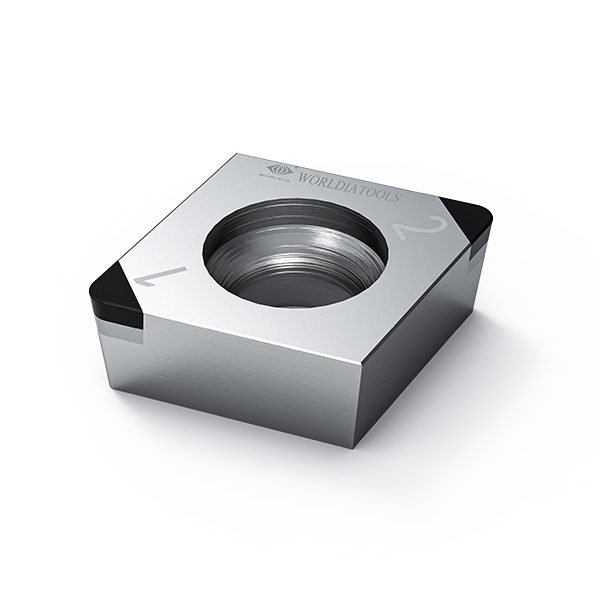
How Does Worldia Position PCD PCBN Cutting Tools?
How Should Buyers Choose Between PCD and PCBN by Material?
PCD and PCBN share the word ‘superhard’, but not the same application space. Aluminium, other non-ferrous materials, graphite and some composites are familiar PCD work. Hardened ferrous material and hard cast iron usually put PCBN into the discussion.
Because Worldia supplies both families, selection can start with the workpiece and cut rather than a preferred insert material. Allowance, interruptions and finish then guide the edge preparation and tool format.
Why Must the Final Choice Reflect the Actual Cutting Condition?
Hardened steel normally sends the PCD vs. PCBN discussion toward PCBN. That only answers the first question. Continuity, impact, rigidity and the observed wear then narrow the grade and edge. Worldia can support application qualification and traceable production; the buyer’s trial sets the usable window on the machine.
Write down the setup while it is still fresh: cutting data, holder, insert geometry, hardness, dimensional trend, roughness, wear and acceptable parts per edge. That record will settle the next decision better than a general performance claim.
FAQ
Q: Are PCBN Cutting Tools Necessary for Every Hardened-Steel Operation?
A: No. Depending on the job, carbide, ceramic, grinding or a mixed route can be the better answer. Hardness, stock, interruption, tolerance and volume all have a say.
Q: What Is the Difference Between Continuous and Interrupted PCBN Cutting?
A: A continuous cut loads the edge more evenly, so wear resistance often leads the discussion. Interruptions hit the edge. Toughness and a stronger preparation then move up the list.
Q: Should PCD or PCBN Be Used for Hardened Steel?
A: Start with PCBN for hardened ferrous steel. PCD is normally the material for non-ferrous and abrasive non-metallic work.