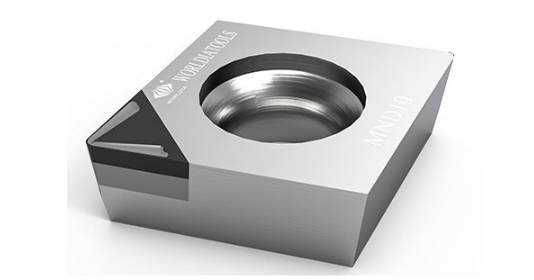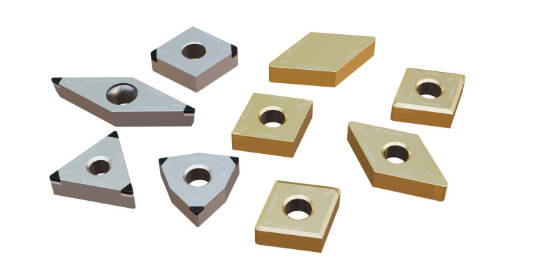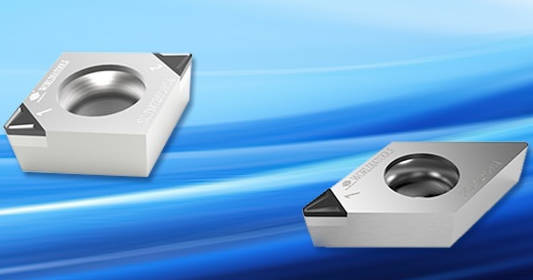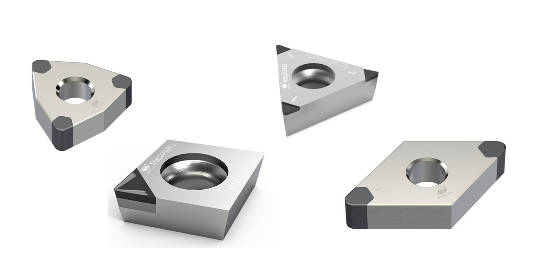

Precision hard machining asks a cutting tool to maintain an edge under heat, abrasion, and changing engagement while protecting part geometry and finish. That is why PCBN inserts are evaluated for ferrous workpieces that are difficult to finish economically with conventional tools. Buyers need to match the workpiece, feature, cut continuity, and required output to a suitable insert or tool format. Common starting points include hardened steel, cast iron, sintered iron, and powder-metallurgy components.
Which Workpiece Materials Most Often Call for PCBN Inserts?
PCBN is a polycrystalline cubic boron nitride cutting material made by sintering cubic boron nitride particles with a binder under high pressure and temperature. In ferrous machining, thermal stability and resistance to abrasive wear make PCBN inserts relevant where high hardness or abrasive microstructures load the cutting edge. Material group is the first filter, followed by hardness, allowance, feature form, and cutting stability.
Why Are Hardened Steel Components a Core PCBN-Insert Application?
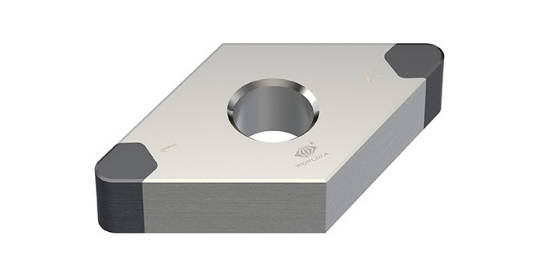
Hardened steel is a central application because bearing steels, tool steels, mould steels, and similar parts can combine high hardness with tight finish requirements. PCBN for hard part turning can be considered for end faces, bores, grooves, and other precision features when the cutting process is understood. A PCBN turning insert is not selected on hardness alone: the material condition, interrupted engagement, machining allowance, and surface target must all be checked together. This keeps the selection focused on repeatable hard machining rather than a generic substitution for every steel operation.
How Do Cast Iron and Powder-Metallurgy Parts Change the Selection?
Cast iron and powder-metallurgy parts can create different wear and impact conditions from hardened steel. Engine cylinders, valve bodies, hydraulic-system parts, brake discs, and transmission components may require application-specific PCBN tools. For these materials, PCBNプラグイン should be screened against cut continuity. Available grade families distinguish continuous, light-interrupted, interrupted, and heavy-interrupted work, moving selection beyond the material name to the load carried by the tool.
What Precision Components Are Commonly Machined with PCBN Tools?
The value of PCBN tools is clearest when the task has a defined feature, repeatable workpiece condition, and measurable quality requirement. Precision hard machining may involve a finished face, bore, groove, shoulder, or profile rather than an entire component. The tool can then be assessed within a turning, grooving, boring, or special-tool process, chosen around access, feature geometry, and production consistency.
Where Do Gears, Shafts, Brake Parts, and Machine Components Fit?
Gears, shafts, brake parts, machine-tool guide rails, and hard-machined automotive components are useful application families because critical features commonly demand stable size and finish. One hard-steel grooving example covers a shaft at HRC58-62 with a surface-finish requirement; another concerns a finished end face. These examples do not create a universal cutting recipe, but they show why controlled finishing and grooving operations assess tool life, output, and surface quality together.
Can PCBN Support Valve Seats and Steel-Roll Work?
PCBN for valve seat machining should be reviewed against seat material, feature geometry, cut interruption, access, and tolerance before a tool is specified. The same care applies to PCBN for turning steel rolls. Available evidence lists roll wheels and calendering-roll spindles among PCBN turning-tool applications, but does not verify a named steel-roll case. A component drawing and short machining trial are appropriate next inputs for either enquiry.
How Do Cutting Conditions Determine Whether PCBN Inserts Are a Fit?
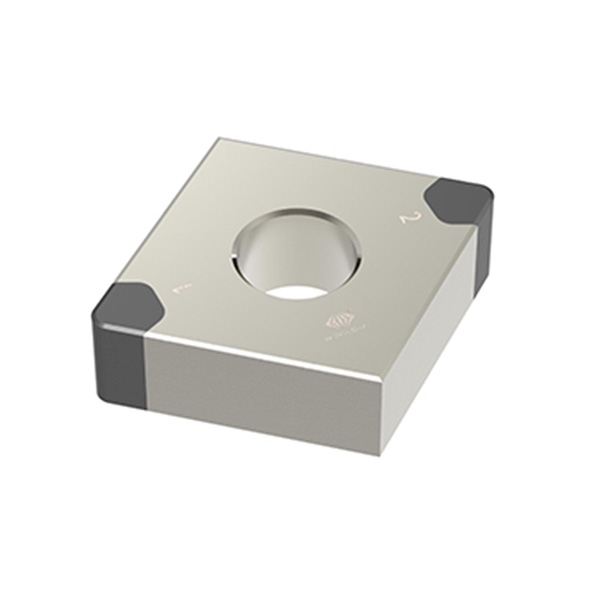
Material compatibility is necessary but insufficient. PCBN inserts perform within a process window shaped by cutting speed, feed, depth of cut, machine rigidity, clamping, coolant practice, and the regularity of engagement. A stable continuous cut can create a different demand from a feature that repeatedly enters and leaves the workpiece. Selection should therefore compare the actual operation with the intended application class instead of transferring a result from an unrelated part.
Is PCBN for High-Speed Continuous Turning the Right Starting Point?
PCBN for high-speed continuous turning can be a useful starting phrase when the operation has steady engagement and a sufficiently rigid setup, but the phrase is not a specification. The workpiece hardness, allowance, target finish, and machine capability still determine a viable parameter window. Project evidence includes continuous-cut applications and grade guidance for continuous machining, yet these materials do not establish a single speed for every part. A production team should validate the complete process, then confirm the suitable PCBN insert grade and geometry for the chosen operation.
How Should Interrupted Cuts Change the PCBN Insert Choice?
Interrupted cuts add repeated mechanical shock to thermal and abrasive load. Available grade information for hardened steel, cast iron, and powder metallurgy separates light, medium, and heavy interruption. Before choosing a PCBN turning insert, teams should identify whether interruptions arise from keyways, holes, cross features, inconsistent stock, or another recurring condition. That is more useful than claiming one grade covers every hard-machining task.
What Does PCBN Construction Mean for Application Selection?
PCBN material is best treated as part of an application system, not as a single construction with identical behaviour in every tool. Available product information covers PCBN-tipped inserts and full-face PCBN inserts for specific finishing applications. Buyers should ask which construction, cutting edge, and tool body are appropriate for the operation rather than relying on an informal label alone.
What Is PCBN Material and When Does Full-Face PCBN Matter?
Relevant PCBN material properties include resistance to wear in high-hardness machining and stability in ferrous-material applications. Full-face PCBN is a verified format for finish turning and milling of cast iron and hardened materials, not a default choice for every turning process. Turning and milling formats should be compared by process, feature, and expected engagement. This prevents a construction term from being mistaken for a complete recommendation.
How Should Buyers Read the PCD-PCBN Tool-Material Market?
The phrase PCD-PCBN tool-material market is often a starting point for commercial research, but a reliable selection should begin with machining compatibility rather than unverified market claims. For precision hard machining of ferrous materials, PCBN tools merit review because the verified material guidance addresses hardened steel, cast iron, sintered iron, and powder metallurgy.
How Can Worldia Support a PCBN-Insert Application Review?
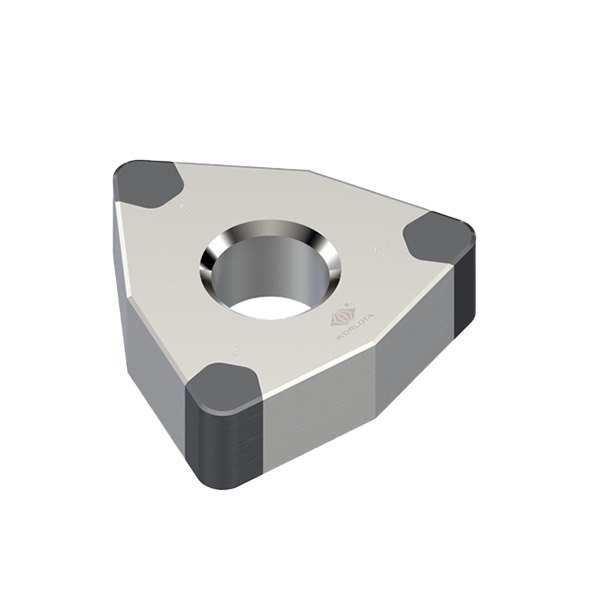
世界 can review a PCBN-insert application from the workpiece and process outward. We begin with material grade and hardness, then assess the feature drawing, allowance, tolerance, roughness target, machine and clamping conditions, cut continuity, coolant practice, and current tool result. This creates a defensible route to compare PCBN inserts for hardened steel, cast iron, or powder-metallurgy work rather than selecting from a catalogue label alone.
Which Details Should We Review Before Recommending an Insert?
For a useful technical enquiry, Worldia needs the part material, hardness range, machined feature, drawing or feature dimensions, machining allowance, desired finish, production volume, cutting parameters, and a description of any interrupted condition. We also review the existing tool, observed wear mode, tool-change frequency, and process constraint that matters most to the buyer. Worldia can then align the request with relevant PCBN grade families and tooling routes while keeping the final recommendation tied to verified operating conditions.
When Are Standard and Custom PCBN Tools Relevant?
Standard inserts are practical when the holder interface and feature suit an established format. Custom PCBN tools become more relevant where access, profile, groove form, or component geometry does not fit the standard route. Worldia provides both a superhard cutting-tools category and a custom special-tools route, allowing an engineering discussion to start with the application rather than an unsupported performance promise.
FAQ
Q: Are PCBN inserts mainly used for hardened steel and cast iron?
A: These are common application groups. Project evidence also identifies sintered iron and powder-metallurgy components. The final choice should still follow the actual feature, hardness, cut continuity, and required finish.
Q: Is PCBN for high-speed continuous turning always appropriate?
A: No. Continuous engagement can support a relevant PCBN application discussion, but speed must be validated with material condition, allowance, machine rigidity, clamping, and the selected tooling system.
Q: Can PCBN be used for valve seat machining?
A: PCBN for valve seat machining requires an application review of seat material, geometry, interruption, tolerance, and tool access. A verified valve-seat case is not available here, so a drawing and trial plan are needed before a product recommendation.