
PCD drilling tools can support high-speed production in aluminum and fiber-reinforced composites, but the same settings cannot be transferred between the two materials. Aluminum tends to create ductile chips, adhesion, and exit burrs. Composites create abrasive dust, fiber pull-out, delamination, and heat-sensitive matrix damage. A sound decision therefore compares the material, drill geometry, spindle system, evacuation method, and acceptance measurements together.
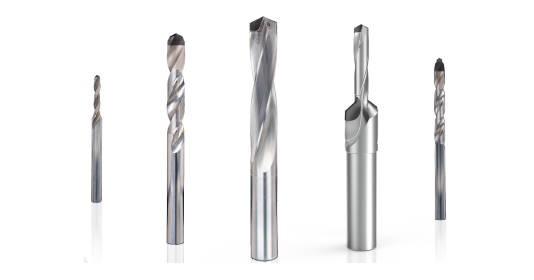
Why Are PCD Drilling Tools Considered for High-Speed Production?
PCD is considered for drilling tools because its hard cutting phase can retain a sharp edge under abrasive conditions. A polished edge and smooth flute support chip or debris flow, but edge quality cannot compensate for excessive runout or poor balance.
Which PCD Properties Help Preserve the Cutting Edge?
A sharp, polished edge supports clean shearing, while a smooth groove gives chips or fragments a path away from the cutting zone. Hole quality and tool life still depend on workpiece composition, engagement, cooling, and the actual speed-feed window. PCD is a process component, not a guarantee of a fixed hole count.
Why Do Runout, Balance, and Toolholding Still Set the Limit?
At high speed, runout changes edge loading and can enlarge the hole even when nominal diameter is correct. Poor balance raises vibration and heat; excessive projection magnifies both. A rigid holder, short overhang, verified balance, and measured runout are prerequisites for PCD drilling tools. Check these before changing spindle speed.
How Do PCD Drilling Tools Perform in High-Speed Aluminum Drilling?
In aluminum, the opportunity is high output with controlled heat and clean chip evacuation. During a high-speed trial, compare how drill geometry, speed, and feed affect hole diameter, burr formation, thrust, and torque. The practical question is not whether a tool can rotate quickly, but whether the selected window keeps chips moving and the exit edge supported.
How Do Aluminum Chips, Adhesion, and Exit Burrs Affect Hole Quality?
Aluminum’s ductile chips can curl, weld to the edge, or recut against the hole wall. Silicon-rich alloys can add abrasion, while insufficient flute space allows chips to pack and raise temperature. Built-up material changes the effective geometry and can leave a rough wall or oversized hole. At breakthrough, inadequate backing or an aggressive feed can produce an exit burr even when the entry looks acceptable. A stable PCD drilling trial should inspect both sides of the hole.
Which Measurements Define a Stable Aluminum Drilling Window?
Track diameter, roundness, burr height, thrust, torque or spindle load, temperature indications, and conforming-hole count. If load rises while diameter drifts, the issue may be chip removal, adhesion, or edge wear rather than insufficient rpm. Different application speeds and feed-per-tooth values show why parameters must remain feature-specific.
How Do PCD Drilling Tools Perform in High-Speed Composite Drilling?
Composite drilling changes the failure mechanism. Reinforcing fibers are abrasive and directional, while the matrix can soften or fracture under heat. A PCD drilling trial should evaluate delamination, diameter, roundness, roughness, profile damage, inter-plate damage, and exit burrs. The result is a process that may look productive by cycle time while failing the part at the exit.
How Do Fiber Direction, Thrust, and Heat Create Composite Damage?
Cutting across fiber bundles can raise thrust and pull fibers from the matrix. Excessive heat can soften the matrix, promote smearing, or accelerate wear; unstable support can open delamination at entry or exit. In high-speed CFRP drilling, monitor thrust, torque, temperature, and wear under the chosen test conditions. A composite trial must therefore control force and temperature, not speed alone.
Why Must Dust Removal and Exit Support Be Treated Separately?
Composite dust and fragments do not behave like ductile aluminum chips. They can remain in the flute, abrade the edge, or be recut into the wall. Vacuum or directed air, backing support, clamping pressure, fiber orientation, and exit inspection should be specified with the hole tolerance. PCD drilling tools can reduce wear-related defects in tested conditions, but the result depends on the complete fixture and process.
Which Process Controls Keep High-Speed PCD Drilling Stable?
Establish the process window as a controlled experiment. Hold tool, holder, support, and measurement method constant while varying speed and feed. Record load, temperature, hole geometry, surface condition, burrs or delamination, and edge condition. This creates a production decision rule rather than a single successful sample.
How Should Speed, Feed, Geometry, and Runout Be Balanced?
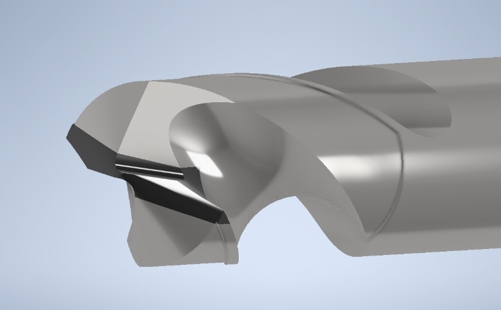
Speed and feed interact with point geometry, diameter, and material thickness. Higher speed can reduce cycle time but increase heat; higher feed can raise thrust and exit damage. Use the smallest practical runout and compare results at fixed inspection intervals. The winning setting meets hole-quality limits over the required run, not the highest rpm.
How Does Chip Evacuation in Drilling Limit Heat and Recutting?
For drilling applications, evacuation determines whether material leaves the cutting zone. Aluminum needs flute capacity and suitable pecking or coolant delivery; composites may need controlled air or vacuum. Chip evacuation is therefore a material-and-geometry decision. Watch for load oscillation, heat tint, wall scratching, and compacted debris.
When Does a Drilling Process Need Its Own Qualification Window?
Different hole sizes magnify setup error. Runout acceptable on a conventional hole can affect hole quality. Flute capacity, projection, balance, feed programming, and inspection resolution must be reviewed together to define when a separate drilling process is necessary.
Why Do Runout and Flute Capacity Affect Drilling Stability?
Tool diameter, material properties, and cutting conditions influence chip evacuation and heat generation. A polished groove and stable tool rotation improve cutting stability, while packed debris can accelerate wear. Measure runout, limit projection, and inspect before quality drift occurs.
How Should CNC Drilling and Tool Qualification Be Linked?
Validate the machine program with production acceleration, feed interpolation, holder, and workholding. Qualify drilling tools with representative material, depth, tolerance, and inspection equipment. A longer run is needed to expose temperature growth, edge wear, and evacuation limits; record it separately from a standard-hole recipe.
How Can Worldia Support PCD Drilling Tools Qualification?
At Worldia, we can connect PCD geometry, precision manufacturing, measurement, balancing, and application data. Start with a complete workpiece and process description, not a nominal speed. Worldia is most useful when a trial compares aluminum with composites or different hole-size applications.
Which Manufacturing and Inspection Capabilities Can Buyers Evaluate?
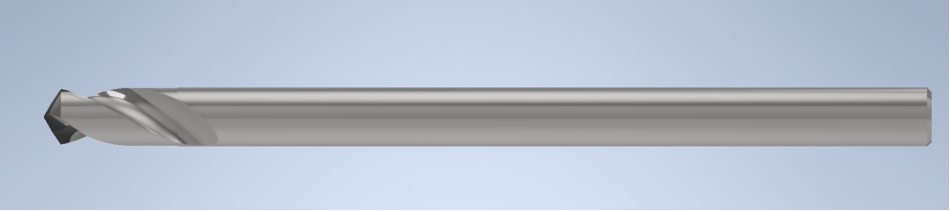
Buyers can ask how laser shaping, precision grinding and polishing, tool measurement, and balancing are controlled. These affect edge form, flute finish, concentricity, and rotational consistency. For PCD drilling tools, connect each step to runout, hole position, burr, delamination, or edge-condition requirements.
What Application Data Should Buyers Provide for Review?
Send material or reinforcement, hole size and depth, tolerance, entry and exit targets, machine, holder, runout, fixture, coolant or air method, speed and feed, cycle target, and defect pattern. At Worldia, we can then assess whether PCD drilling needs a geometry change, different evacuation method, or separate process qualification.
FAQ
Q: Are PCD Drilling Tools Equally Effective in Aluminum and Composites?
A: No. PCD can be suitable for both, but aluminum is governed mainly by ductile-chip control, adhesion, burrs, and heat, while composites are governed by fiber damage, dust evacuation, thrust, delamination, and matrix temperature. Each material needs its own speed-feed and acceptance window.
Q: Does a Higher Spindle Speed Always Improve PCD Drilling Performance?
A: No. Higher speed can shorten cycle time, but it can also raise heat, vibration, recutting, or composite damage. Validate speed with feed, geometry, runout, support, evacuation, force, temperature, and hole-quality measurements.
Q: When Should a Drilling Process Be Qualified Separately?
A: Use a separate window when hole size makes runout significant, flute capacity limits evacuation, inspection resolution is tight, or force and temperature rise rapidly. The qualification should use the production machine, holder, support, material, and acceptance criteria.