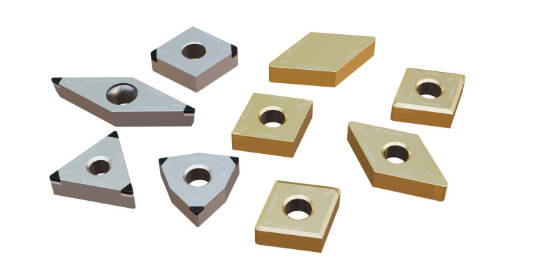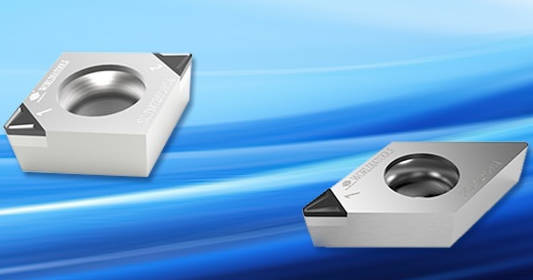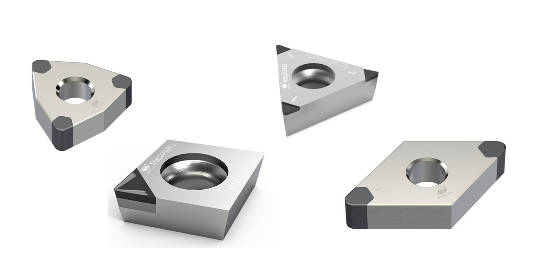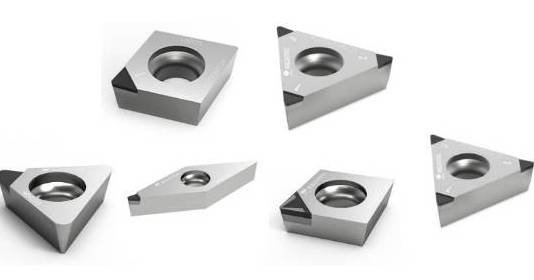

PCD diamond inserts can improve machining stability when abrasive particles would quickly wear or damage a conventional cutting edge. However, diamond hardness alone does not guarantee predictable results. Grade structure, edge preparation, nose geometry, insert seating, runout, machine rigidity, cutting parameters, and the chosen wear limit must work together. A well-matched insert wears gradually, so operators can control dimensions and surface finish across a production batch. A poor match can still produce chipping, sudden size drift, unstable finish, or unnecessary tool changes. The practical objective is therefore controlled wear and repeatable part quality, not simply the longest possible cutting time.
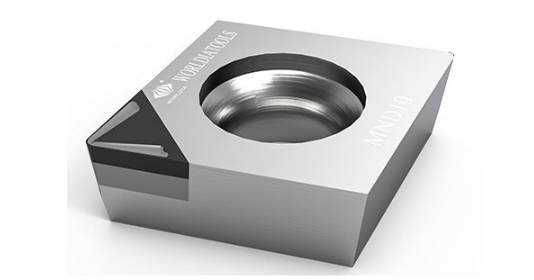
What Are PCD Diamond Inserts and Why Do They Suit Abrasive Materials?
What Does Polycrystalline Diamond (PCD) Mean in a Cutting Insert?
Diamant polycristallin (PCD) is produced by sintering diamond particles with binder materials with different compositions under high temperature and pressure. The structure combines diamond wear resistance with substrate support and offers high thermal conductivity, low friction, and low thermal expansion. PCD, or polycrystalline diamond, identifies the cutting material. The PCD material forms only the cutting layer; a complete PCD insert also requires a defined edge, corner form, mounting interface, and dimensional specification.
Which Abrasive Workpiece Materials Fit PCD Inserts Best?
Common applications include high-silicon aluminum, metal-matrix composites, graphite, hard rubber, fiber-reinforced plastics, wood-based materials, and carbide. Each workpiece creates a different combination of abrasion, edge loading, and finish requirements. PCD inserts are normally associated with non-ferrous and nonmetallic machining rather than hardened ferrous workpieces, so buyers should confirm composition, abrasive phase, allowance, and cutting continuity.
Which PCD Insert Design Factors Improve Wear Resistance?
How Do PCD Grain Size and Grade Structure Change Abrasion Resistance?
PCD grades provide different balances of properties. Fine-grain material can support a refined edge and fine surface generation. A general-purpose grade can balance toughness and wear resistance, while a mixed-grain structure can combine edge quality, thermal stability, and strong abrasion resistance for MMC or high-silicon aluminum. Grade selection should follow the expected failure mode, cutting continuity, rigidity, and required finish rather than the hardest available PCD diamond.
Why Do Edge Preparation, Nose Geometry, and Wiper Design Matter?
A sharp edge lowers force and can support a fine finish, but insufficient support can increase microchipping. A stronger edge preparation improves security, although excessive strengthening may raise force and heat. A larger nose radius can improve the theoretical profile but may promote vibration or deflection. Wiper geometry can support finish or feed improvements when alignment, runout, rigidity, and workpiece support are controlled. Edge design must be evaluated as part of the complete PCD tooling system.
How Do PCD Diamond Inserts Maintain Dimensional Consistency?
How Does Progressive Edge Wear Create Size and Finish Drift?
As a cutting edge wears, the effective tool point and workpiece contact change. Force can rise and the finished dimension can move while the edge remains visually intact. PCD diamond inserts support consistency when wear develops slowly enough for inspection and offset rules to detect movement. Tool life should end when dimensional error, roughness, burr formation, or process stability crosses an agreed limit, not only when the edge fractures.
Why Do Insert Seating, Runout, and Indexing Repeatability Matter?
Chips, residue, or pocket damage prevent an insert from repeating the same cutting position. Clamping force, locating faces, screw condition, and installation sequence also affect effective depth of cut and edge loading. Runout should be measured after installation rather than assumed from nominal tolerances. A controlled setup uses clean contact surfaces, repeatable tightening, verified holder condition, and documented offsets before full production resumes.
How Do Grinding, Lapping, Inspection, and Reconditioning Support Consistency?
Edge geometry, corner location, surface condition, and batch repeatability depend on controlled manufacturing and inspection. Regrinding or relapping must preserve the geometry required by the holder and process offsets. Reconditioning can improve lifecycle economics when the design supports service, but buyers should compare first-use and serviced tools with the same dimensional, finish, and wear criteria rather than relying only on nominal insert codes or service price.
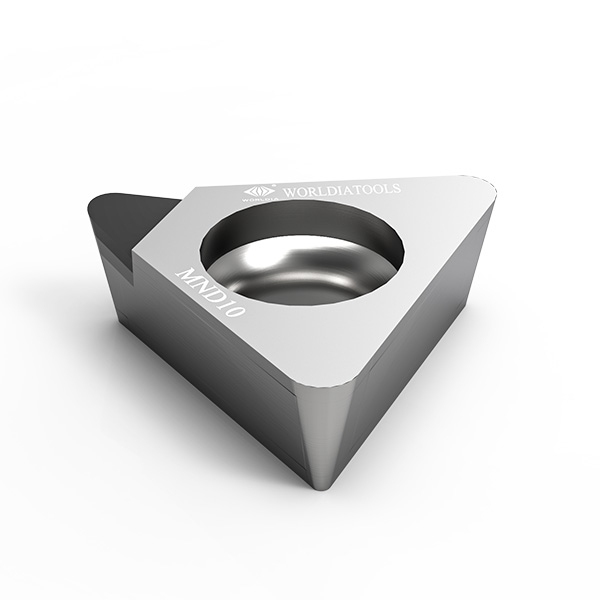
How Should Manufacturers Match PCD Tooling to Abrasive Workpieces?
What Changes Between High-Silicon Aluminum, MMC, Graphite, and Hard Rubber?
High-silicon aluminum and MMC can create severe abrasion while demanding tight finish control. Graphite adds abrasive dust and places emphasis on edge quality and extraction. Hard rubber can respond differently because cutting force, heat, and material recovery affect the surface. One PCD insert cannot serve as a universal solution: grade, edge preparation, rake, clearance, nose form, and parameters must match the material structure, machining feature, and cutting continuity.
What Should a Controlled PCD Insert Trial Measure?
A useful trial fixes material specification, abrasive content, allowance, holder condition, runout, speed, feed, depth of cut, tolerance, and surface target. PCD diamond inserts should then be compared by wear progression, conforming parts per edge, dimensional trend, surface consistency, cycle time, offset frequency, and cost per accepted component. Wear-land records can help distinguish normal abrasion from chipping or setup-related failure, producing a stronger decision than one final tool-life number.
How Can Worldia Help Specify PCD Diamond Inserts for Stable Production?
Which Worldia PCD and CVDD Insert Options Fit Different Abrasive Conditions?
Worldia offers PCD diamond inserts and CVDD routes for different edge and wear requirements. PD01E is a fine-grain option for refined edge quality, PD10E balances toughness and wear resistance, and mixed-grain PD32E supports abrasion resistance, edge strength, and thermal stability. CVDD provides a binder-free option for severe abrasion and fine-edge requirements. Our routes also include MANANOVA PCD inserts, indexable PCD milling systems, custom superhard tools, and supported reconditioning services.
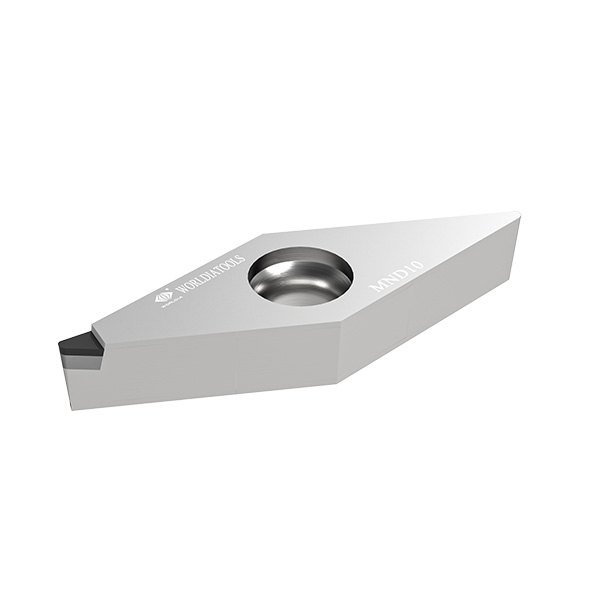
What Application Data Should We Review Before Recommending an Insert or Tooling System?
We should review the abrasive phase, drawing, machining feature, allowance, tolerance, surface target, machine, holder, runout, parameters, and observed failure mode. Our application review can separate a standard insert requirement from a custom grade, edge, wiper, corner, or tooling-system requirement. Worldia recommends validating the proposed solution with controlled production data, agreed wear limits, and cost per conforming component.
FAQ (questions fréquentes)
Q: What Is the Full Form of PCD in a PCD Insert?
A: PCD stands for polycrystalline diamond. The cutting material contains bonded diamond particles supported by a carbide substrate. The full PCD insert includes that cutting material plus the edge geometry, corner form, and mounting features required by the machining operation.
Q: Are PCD Diamond Inserts Suitable for Hardened Steel?
A: PCD is normally selected for non-ferrous and abrasive nonmetallic materials. Hardened steel is a ferrous material and generally requires a cutting material designed for high-temperature contact with iron. Final selection should follow the exact material and process.
Q: How Should Tool Life and Dimensional Drift Be Evaluated for PCD Inserts?
A: Record dimensions, finish, wear, offset corrections, cycle time, and conforming parts at planned intervals. End tool life when an approved quality or stability limit is reached, rather than waiting for fracture. This method separates predictable abrasion from setup or edge-failure problems.